
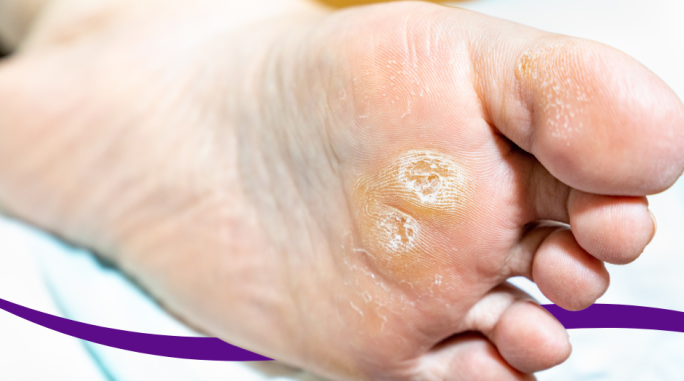
Corns and calluses are common foot problems, often appearing as areas of hard skin or thickened skin, or even painful bumps on the feet or toes. They're often caused by excessive pressure, repeated friction, or ill-fitting shoes. Although foot corns and calluses may seem small, they can make walking uncomfortable, affect how you wear shoes, and may even become slightly swollen. At our Brisbane clinics, we remove corns and calluses safely, gently and effectively to help you move comfortably.
Common causes of corns & calluses
Corns and calluses develop when the skin tries to protect itself from ongoing pressure or rubbing. Think of it this way: if normal skin is exposed to too much pressure, it can either break down (leading to an open wound), or form a protective hard cover over it. This hard cover (with a rubbery texture) is called callus. Corns are similar in nature, but have a cone-shaped centre. Both corns and calluses are made of dead skin, and sometimes have painful bumps that feel firm, rubbery, or tender. Understanding what’s causing your callus formation or why you develop corns is the first step toward preventing them from returning. Common causes include:
Ill-fitting footwear
Shoes that are too tight, narrow, or loose can rub against the skin, leading to hard corns. Long-term friction from poor fitting footwear is one of the most common reasons of corn development our podiatrists see across our clinics.
High levels of pressure or friction on the feet
Pressure in weight-bearing areas, such as the ball of the foot or the heel, can lead to the development of foot callus or corns. This often happens when you walk long distances, stand all day, or have increased pressure from certain shoes or activities.
Foot deformities (bunions, hammer toes, etc.)
When the bones in your feet sit at unusual angles, they create areas prone to rubbing. Abnormal bone structures lead to repeated friction, resulting in corns and calluses.
Poor foot posture or biomechanics
Issues like poor alignment, flat feet, or high arches can shift pressure to areas not designed to handle it well, increasing the risk of calluses, irritation, and hard skin buildup.
Activities that increase repetitive rubbing/pressure
Running, hiking, dancing, or wearing certain work shoes can increase the likelihood of painful corns and calluses forming because of constant rubbing or loading on the same weight-bearing areas.
Brisbane clinic locations & opening hours
We provide corn & callus treatment removal at both of our convenient Brisbane locations — in the CBD and Newmarket. Find clinic details and opening hours below:
Brisbane CBD clinic information
-
Mobile: 0483932145
Phone: (07) 3356 3579
Fax: (07) 3220 3851
Address: Ground Floor/344 Queen Street, Brisbane QLD 4000 -
Operating Hours:
Monday: 7:40am – 6:30pm
Tuesday: 7:40am – 6:00pm
Wednesday: 7:40am – 6:30pm
Thursday: 7:40am – 6:00pm
Friday: Temp Closed
Saturday: Closed
Sunday: Closed
Newmarket clinic information
-
Mobile: 0483932146
Phone: (07) 3356 3579
Fax: (07) 3220 3851
Address: Shop 114, Newmarket Village, 400 Newmarket Road, Newmarket QLD 4051 -
Operating Hours:
Monday: 7:40am – 6:00pm Tuesday: 7:40am – 6:00pm Wednesday: 7:40am – 6:00pm Thursday: 7:40am – 6:30pm Friday: 7:40am – 5:00pm Saturday: 7:40am – 4:30pm Sunday: Closed
How we diagnose, assess and treat corns & calluses
Diagnosing corns and calluses starts with examining the affected area (usually the feet and toes), identifying whether you have developed callus or a corn (this may be hard corns, soft corns or seed corns) or both. We also assess your footwear, gait, and foot posture to understand the underlying cause of your symptoms. Sometimes, corns and calluses can mimic other conditions, so it’s important to diagnose the problem you have correctly.
During your appointment, we’ll also look for contributing factors like your foot biomechanics, abnormal bone structure, or other causes of excessive pressure when walking.
Please note: attempting to remove calluses and corns at home (often with a sharp object) can damage the skin, cause breaks in the skin and bleeding, and risk an infection infection. If you have conditions like diabetes or neuropathy, this can be a big risk, and it's highly recommended you see a podiatrist who can gently remove dead tissue, thin down thickened areas, and help your skin feel soft and smooth.
Callus & corn treatment options we provide
We offer a range of podiatry treatment options designed to relieve pain, improve comfort, and prevent the recurrence if corns and calluses.
Why do we recommend early treatment of corns & calluses?
Early treatment helps prevent the build-up of too much skin, which often leads to pain, redness, or even difficulty wearing certain shoes. Foot corns and calluses rarely resolve on their own because the underlying cause, such as friction, pressure, or poor biomechanics, continues every day you’re on your feet.
Ignoring these issues can lead to worsening foot pain and more excess skin build up. Early care allows us to comfortably remove the buildup, identify what’s causing it, and put strategies in place to treat calluses, reduce their likelihood of recurrence, and keep your feet healthy long term.
Book an appointment to get corn & callus treatment in Brisbane
If you’re dealing with ongoing discomfort, difficulty in shoes, or simply want smoother, healthier skin on your feet, we’re here to help. Our podiatrists provide gentle, effective, and medically safe callus and corn removal, along with personalised advice to keep the problem from returning.
Book an appointment today and take your first step toward comfortable, healthy feet.
FAQs
Are corns and calluses the same thing?
Both are caused by too much pressure or repeated friction, but they have distinct differences. A callus is a broader area of thickened skin, while a corn is a more concentrated spot of hardened skin that can feel deeper or more painful. Corns has also develop between toes where moisture collects, and seed corns appear as tiny hard spots on weight-bearing areas.
Can corns and calluses go away on their own with podiatry treatment?
Most corns won’t disappear without treatment because the pressure causing them continues daily. You may lessen your symptoms by using home treatments like soaking in warm water, a pumice stone, or an emery board, but professional care is usually needed to resolve the problem and address the underlying cause.
Is it safe to cut out a corn at home? Do home remedies work?
No, trying to manage corns on the feet or toes at home can damage the skin, cause bleeding, or risk introducing infection. Some corns sit right above (or next to) blood vessels, and cutting them incorrectly can be painful and dangerous. It’s safer to see a podiatrist for proper corn removal and advice on home care that will promote your skin health. We can also support you with proper nail care too.
How do podiatrists remove foot corns and calluses?
We use gentle, sterile instruments to remove the hardened layers of dead skin without damaging the healthy surrounding skin. The process is usually painless and provides instant relief. We then look at what’s causing the problem - such as footwear, posture, or too much pressure - and guide you on how to prevent recurrence using solutions like orthotics, among others
How can I prevent corns and calluses from coming back?
Prevention focuses on reducing the pressure and friction applied to your skin. Wearing supportive shoes, addressing alignment issues, using shoe inserts, keeping skin soft, and avoiding ill fitting footwear all help. Moisturising to soften corns, keeping toenails trimmed, managing sweaty feet, and being very careful when using over-the-counter products also support long-term foot health.
What is the safest way to do callus removal at home?
Safe home treatments vary from person to person - for some people, no home treatment may be considered safe if they have 'high risk' feet. For others, it may include soaking your feet in warm water, gently using a pumice stone or emery board, and moisturising to keep skin soft. Avoid cutting the skin or removing too much at once. If you have a large foot callus, persistent hard skin, or foot pain, professional podiatry treatment is highly recommended.