
Getting a diagnosis of Charcot Marie Tooth disease (CMT) can cause a lot of uncertainty due to the effects this condition can have on the strength, shape and feeling in your feet over time. Our podiatrists are highly experienced in working with patients with a range of neurological disorders including CMT, working closely with you to help find practical ways to walk more safely and comfortably.
Charcot Marie Tooth disease describes a group of inherited neurological disorders that affect your peripheral nervous system. Think of the peripheral nerves like communication cables. They carry messages between the brain and spinal cord and the muscles, joints and skin throughout the body.
Motor nerves carry instructions from the brain that tell the muscles to move. Sensory nerves carry information in the other direction, allowing you to feel touch, pressure, temperature and where your feet are positioned. In CMT, these nerves do not carry messages as effectively as they should. Over time, the muscles they supply may become weaker and smaller, and feeling in the hands or feet may change.
CMT is sometimes called hereditary motor and sensory neuropathy. Hereditary means that it is caused by a change in a gene that can be passed through a family. Neuropathy means damage or reduced function in the nerves. CMT is one of the most common inherited forms of peripheral neuropathy, affecting an estimated 1 in 2,500 people.
There is currently no cure for Charcot-Marie-Tooth disease. However, treatment and ongoing support can help manage symptoms, protect the feet, improve safety and maintain independence.
How Charcot-Marie-Tooth Disease Can Affect the Feet an Ankles
As the longest peripheral nerves are often affected first in CMT, symptoms commonly begin in the legs and feet. Signs of CMT (listed below) may start in childhood, teenage years or early adulthood, although some people are not diagnosed until much later.
CMT can affect people very differently. One family member may have high arches and mild ankle weakness, while another person in the same family may need braces or walking aids. Even people with the same type of CMT can have different symptoms and levels of disability.
Changes that may affect the feet and ankles include:
- Difficulty lifting the front of the foot: this is called foot drop. The toes may catch the ground, the foot may slap down while walking, or the person may lift the knee higher to clear the floor.
- Weakness in the feet and lower legs: muscle weakness can make walking on the heels, pushing off through the toes or controlling the ankle more difficult.
- High arches: high arched feet, also called pes cavus, are common in CMT. As the muscles pull unevenly, the arch may become higher and the heel may tilt inwards. Please note that some types of CMT can cause a flatter foot instead.
- Hammer toes or claw toes: the smaller toes may curl or bend as the balance between the muscles changes. These foot deformities can rub against shoes and create painful pressure areas and blisters.
- Ankle instability: weakness around the ankle may make it easier to roll the foot outwards, sprain the ankle, lose balance or fall. Repeated ankle sprains can also lead to chronic ankle instability.
- Numbness or altered feeling: damage to the sensory nerves may reduce the ability to feel touch, pressure, heat, cold or pain. This sensory loss can make it harder to notice rubbing, a blister or a small wound.
- Muscle cramps and fatigue: Muscles that are working harder to keep the body steady may tire or cramp, particularly after a busy day.
- Pain: some people develop pain from overloaded muscles and joints, pressure from foot deformities or irritation of the affected nerves.
- Problems finding shoes that fit: high arches, hammer toes, braces and areas of increased pressure can make standard footwear uncomfortable or unsuitable.
As the disease progresses, hand weakness may develop too. This can affect grip, handwriting, buttons and other fine movements. If your CMT is affecting your hands, an occupational therapist can help with tools and strategies to support you with these tasks.
What Causes Charcot-Marie-Tooth Disease?
Charcot-Marie-Tooth disease is caused by changes in different genes that are needed for healthy peripheral nerves. Some CMT genes affect the nerve fibre itself. Others affect the protective covering around the nerve, called myelin. When either part does not work properly, messages between the spinal cord, nerves and muscles can become slower or weaker.
Because the peripheral nervous system reaches the arms and legs, the longest nerves often show changes first. Other neurological disorders can produce similar signs, which is why weakness or altered feeling should not be assumed to be CMT without a proper assessment.
CMT can be inherited in several ways. These include autosomal dominant, autosomal recessive and X-linked patterns. In simple terms, some forms can be passed on when one parent has the gene change, while others require a change from both parents. X-linked forms involve a gene on the X chromosome. The pattern matters because it changes the chance of another family member or future generations inheriting the condition. A genetic counsellor can explain what the results mean for an individual family.
A person can still have CMT without knowing of anyone else in the family who is affected. Relatives may have very mild signs, the gene change may be inherited in a less obvious pattern, or the change may have occurred for the first time in that person.
Are There Different CMT Types?
Yes. CMT is not one single disorder. There are many CMT types and more than 100 associated genes have been identified. The traditional names include CMT1, CMT2, CMT4 and CMTX. CMT1A is the most common form and usually involves an extra copy of a gene called PMP22.
Older information may also use CMT3 or Dejerine-Sottas disease to describe severe symptoms beginning in infancy or early childhood. Today, Dejerine-Sottas disease is better understood as a clinical pattern that can have different genetic causes, rather than one exact CMT type. This is one reason genetic testing and specialist interpretation can be important.
Brisbane Clinic Locations & Opening Hours
We provide Charcot-Marie-Tooth support and care at both of our convenient Brisbane locations - in the CBD and Newmarket. Find clinic details and opening hours below:
Brisbane CBD clinic information
-
Mobile: 0483932145
Phone: (07) 3356 3579
Fax: (07) 3220 3851
Address: Ground Floor/344 Queen Street, Brisbane QLD 4000 -
Operating Hours:
Monday: 7:40am – 6:30pm
Tuesday: 7:40am – 6:00pm
Wednesday: 7:40am – 6:30pm
Thursday: 7:40am – 6:00pm
Friday: Temp Closed
Saturday: Closed
Sunday: Closed
Newmarket clinic information
-
Mobile: 0483932146
Phone: (07) 3356 3579
Fax: (07) 3220 3851
Address: Shop 114, Newmarket Village, 400 Newmarket Road, Newmarket QLD 4051 -
Operating Hours:
Monday: 7:40am – 6:00pm Tuesday: 7:40am – 6:00pm Wednesday: 7:40am – 6:00pm Thursday: 7:40am – 6:30pm Friday: 7:40am – 5:00pm Saturday: 7:40am – 4:30pm Sunday: Closed
How We Diagnose, Assess and Treat Charcot-Marie-Tooth
A podiatrist may be the first health professional to notice a pattern of high arches, foot drop, reduced feeling, weak ankles or repeated tripping. However, we cannot confirm the genetic diagnosis of Charcot-Marie-Tooth disease.
If your history and physical examination suggest an inherited nerve disorder, we may recommend a referral to a neurologist, who is a doctor trained in disorders of the brain, spinal cord and nerves.
A neurological assessment may include:
- A medical and family history: the neurologist will ask when the symptoms began and whether a parent, sibling or other family member has similar symptoms.
- A physical examination: this may assess reflexes, muscle strength, muscle bulk, balance and the ability to feel touch, vibration and temperature.
- Nerve conduction studies: small electrodes are placed on the skin to measure how quickly and strongly the nerves carry electrical signals. This helps show whether the protective covering or the nerve fibre is mainly affected.
- Electromyography: often shortened to EMG, this test measures the electrical activity of selected muscles. It may be used alongside nerve conduction studies.
- Genetic testing: a blood or saliva sample may be checked for changes in known CMT genes. Genetic testing can sometimes confirm the diagnosis and identify the specific CMT type, although it does not find an answer for every person.
Genetic testing can be complex. Results should be interpreted by a neurologist, clinical geneticist or genetic counsellor who can explain what they mean for care planning and other members of the family.
How Our Podiatrists Assess Your Feet and Walking
If you already have a CMT diagnosis, our role is to understand how the disorder is affecting your feet now, what support may make daily life easier, and what we can be doing immediately to make your walking and movement as comfortable as possible.
Your podiatry assessment may include:
- checking the shape and position of the feet and toes
- testing movement through the foot and ankle joints
- looking at the strength of different muscles in your lower limbs
- checking sensation and identifying areas you may not feel clearly
- assessing balance and ankle stability
- watching how you stand and walk
- checking whether the toes clear the ground during walking
- reviewing current shoes, orthotics, braces and walking aids
- checking the skin and nails for pressure, callus, wounds or infection
We will also ask which activities are difficult, where you feel tired or sore and what you want help with. One person may want to walk to work with fewer trips. Another may want roomier shoes that fit over hammer toes. Your care plan will reflect the problems that matter to you.
Charcot-Marie-Tooth Treatment Options We Provide
There is no treatment that can currently reverse the genetic change causing CMT. Podiatry care focuses on supporting the feet, toes ankles and legs in the ways they are affected by the condition, protecting areas with reduced feeling and helping you remain as safe, comfortable and independent as possible.
Footwear Advice and Modifications
The right shoe needs to match the shape of your foot and any brace or orthotic you use. Depending on your needs, helpful features may include:
- enough depth and width for a high arch, hammer toes or an ankle brace
- a secure fastening so the shoe does not slip
- a stable sole and a firm heel counter, which is the part that cups the back of the heel
- a removable insole to create more room
- cushioning in areas exposed to extra pressure
- a lightweight design that does not make foot drop harder to manage
We may recommend suitable retail footwear, modify an existing shoe or assess whether custom footwear is appropriate. The goal is not simply to find a “supportive” shoe. It is to find one that fits your particular foot shape, provides stability and works with the way you walk.
Custom Foot Orthotics
Custom orthotics are inserts made to suit your feet. For someone with CMT, they may be designed to support a flexible high arch, improve contact with the ground, reduce pressure under a prominent area or help a shoe fit more comfortably.
It is important that orthotics are custom made for your unique foot, instead of using a pre-made orthotic, as pre-made orthotics are inherently not designed for feet affected by CMT or nerve disorders. We will explain what kind of an orthotic could help you, and what it would be working to achieve, at your appointment, if your clinical assessment reveals that custom foot orthotics could benefit you.
Ankle-Foot Orthoses and Braces
An ankle-foot orthosis, often called an AFO, is a brace that supports the foot and ankle. Unlike an orthotic (insole) that sits only under the foot, an AFO extends above the ankle, specifically designed to also support the ankle and foot in other ways too.
An AFO may help lift the toes when there is foot drop, steady a weak ankle and make walking more efficient. It can also provide stability and reduce the risk of catching the toes. The best brace for you depends on muscle strength, joint movement, foot shape, footwear and day-to-day activities. Bracing should be fitted and reviewed for the individual rather than chosen from a generic list, and your podiatrist will discuss the options at your appointment if your exam results indicate that an AFO would help you.
Skin, Nail and Pressure Care
Reduced sensation can make it harder to notice a blister, cut, corn or pressure injury. High arches and toe changes can also concentrate weight onto smaller areas of skin.
Regular foot checks allow us to find these foot problems early. Treatment may include managing corns, callus and thickened nails, protecting a vulnerable area with padding or a toe prop, and changing footwear or orthoses to reduce rubbing. We can also show you what to look for when checking your own feet at home.
We often see those with CMT every 6-12 weeks for ongoing foot and nail care. Please note, you should contact your podiatrist or GP promptly if you notice broken skin with increasing redness, warmth, swelling, discharge or a wound that is not healing, especially if feeling in the area is reduced.
Exercise and Allied Health Support
Moderate activity can help people with CMT maintain fitness, movement and confidence. The right amount will differ between people. The aim is to keep active without pushing tired or weak muscles beyond what they can recover from.
We may provide gentle foot and ankle exercises, as well as work in with your physical therapist to ensure you get the best overall care. Physical therapy may focus on flexibility, balance, muscle strength, fitness and safe ways to move. If hand weakness or daily tasks are becoming harder, an occupational therapist may recommend equipment or new ways to complete them.
Referral for Medicines or Surgery When Needed
Pain in CMT can come from nerves, muscles, joints or pressure from a changed foot shape. Because the treatment differs, it is useful to work out which type of discomfort is present rather than treating every symptom in the same way.
Your GP or neurologist can advise on medicines for nerve pain or frequent muscle cramps. If foot deformities become rigid, painful or difficult to fit into shoes, we may recommend an opinion from an orthopaedic or podiatric surgeon. Surgery may help selected people with severe symptoms, but it is not needed by everyone with CMT.
Why Do We Recommend Early and Ongoing Podiatry Care?
Charcot-Marie-Tooth disease usually changes the feet slowly, over time, and there is no cure. This means your needs at 15, 35 and 65 may be different. A shoe, orthotic or brace that worked well several years ago may no longer match your strength, joint movement or foot shape.
Early assessment and regular review can help to:
- identify foot drop, ankle instability and pressure areas
- improve shoe and brace fit
- protect skin when feeling is reduced
- support balance and safer walking
- manage pain and fatigue in the lower limbs
- monitor high arches, hammer toes and other foot deformities
- adjust support as the condition changes
- involve other health professionals when their input is needed
Timely footwear, bracing, pressure relief and rehabilitation may help manage the forces acting on the feet and reduce the day-to-day impact of those changes.
Coping and Support for Living with Charcot-Marie-Tooth
Living with a progressive disorder can be frustrating, particularly when symptoms are not obvious to other people. Support should address the whole person, not just the lower limbs.
Care for people with CMT may involve a GP, neurologist, podiatrist, physiotherapist, occupational therapist, orthotist, genetic counsellor and, when needed, an orthopaedic surgeon. Each professional has a different role. Sharing reports and treatment goals can help the team work together.
It can also help to:
- pace demanding activities and take breaks before the muscles are exhausted
- choose low-impact exercise such as swimming or cycling if appropriate
- ask for a review when falls, fatigue, muscle cramps or other symptoms change
- have shoes, orthotics and braces checked if they begin to rub or feel less effective
- speak with a genetic counsellor about family planning and risk to future generations
- connect with CMT Australia or another support group for practical information and community support
Research and Future Treatments for Charcot-Marie-Tooth Disease
There is currently no approved cure that repairs the affected nerves or corrects all forms of the disorder. Researchers are studying the different genes involved and testing ways to protect nerves, improve muscle function or change the biological process causing a particular CMT type.
Some research includes gene therapy, which aims to add, replace or change genetic instructions inside cells. These approaches remain experimental for CMT. Clinical trials, which are carefully controlled studies involving people, are also examining medicines and other possible therapies. A treatment being tested in a trial is not the same as one that has been proven and approved for routine care.
Eligibility for clinical trials often depends on an accurate diagnosis and confirmed genetic subtype. A neurologist or genetics service can provide further information, and CMT Australia shares research updates and opportunities relevant to people affected in Australia.
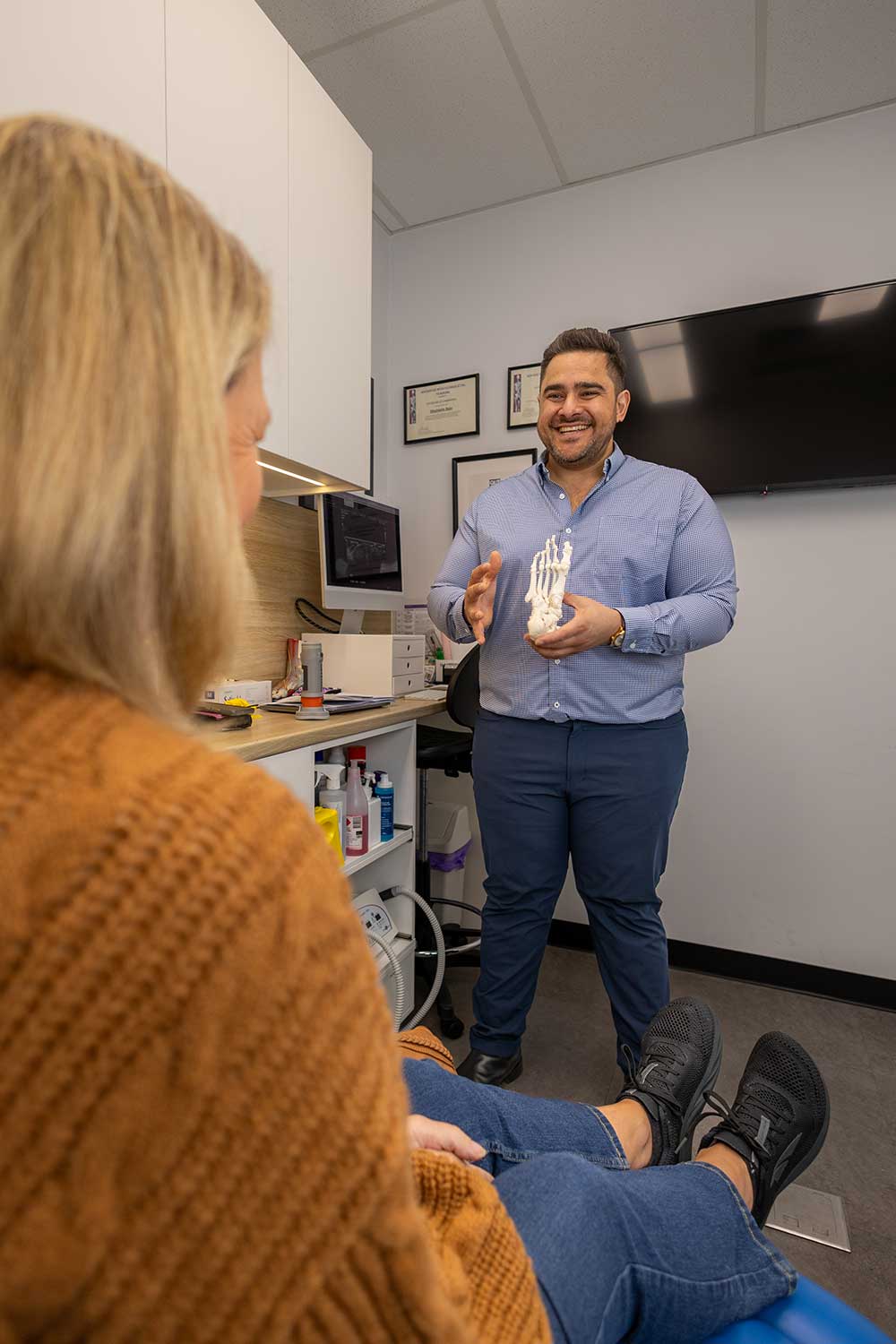
Book an Appointment to Get Charcot-Marie-Tooth Treatment in Brisbane
If Charcot-Marie-Tooth disease is affecting your walking, balance, shoe fit or comfort, our podiatrists can assess what is happening at the feet and ankles and explain the options that may help you walk and live more comfortably. We provide CMT podiatry care at our Brisbane CBD and Newmarket clinics. You do not need a referral to book a podiatry appointment.
FAQs
Can Podiatrists Help Manage Charcot-Marie-Tooth?
Yes. Our podiatrist help manage many of the problems that occur as a result of CMT in the foot, ankle and the lower legs.
This may include assessing walking and balance, monitoring sensation and skin health, recommending footwear, providing custom orthotics or ankle-foot orthoses, treating corns and callus, and referring to other members of the care team when needed to help with other aspects of the disease.
What Are the Best Shoes for Someone with Charcot Marie Tooth Disease?
There is no single best shoe for everyone because CMT affects everyone in different ways. The right choice depends on foot shape, ankle strength, sensation, walking pattern and whether you wear an orthotic or brace.
Many people benefit from shoes with a stable sole, secure fastening, enough depth for high arches or hammer toes and room for any device. Your podiatrist will assess your current shoes and what will be best for you, before suggesting specific features.
Do Orthotics Help People with CMT?
Yes, orthotics are often used to help people with CMT walk, move and live more comfortably. An in-shoe orthotic may redistribute pressure, support a flexible foot position or improve comfort. An AFO (ankle foot orthotic) may be more suitable when foot drop or ankle weakness needs support above the ankle.
Both options help make walking safer or more efficient and protect the feet where possible.
How Often Should I See a Podiatrist or Other Medical Professionals if I Have CMT?
There is no fixed schedule for everyone. The right timing depends on sensation, skin risk, foot shape (e.g. whether you have high arched feet), symptoms and the devices you use.
Some people need regular appointments for skin and nail care or brace checks. Others may only need review when something changes. Book sooner if you develop a wound, new pain, more frequent trips or falls, a change in sensation, or shoes and braces that start rubbing.
Who Should I See if I Am Searching for a CMT Specialist?
A neurologist usually confirms CMT and may arrange nerve conduction studies and genetic testing. A clinical geneticist or genetic counsellor may help identify and explain the genetic subtype. Depending on your needs, the wider team may also include a podiatrist, physiotherapist or physical therapy, occupational therapist, orthotist and orthopaedic surgeon.
Our clinics provide podiatry assessment, management and care for the effects of CMT in the feet, ankles and the lower legs.
Is CMT the Same as Charcot Foot?
No. Charcot-Marie-Tooth disease is an inherited neurological disorder that gradually affects the peripheral nerves and muscles. Charcot foot, also called Charcot neuroarthropathy, is damage and collapse within the bones and joints of the foot, most often linked with significant neuropathy from diabetes.
The names sound similar because both include “Charcot”. CMT was named after Jean-Martin Charcot, Pierre Marie and Howard Henry Tooth. Charcot foot was also named after Jean-Martin Charcot, but it is a separate condition and needs different treatment.
Where Can I Get Further Information on CMT?
For reliable Australian information and support, visit CMT Australia or speak with your GP, neurologist or podiatrist.