
Jump to section
Yellow toenails are often caused by fungal nail infections, although there are other explanations for the colour change. Sometimes it's simply staining left behind after you've removed nail polish.
Others find that a toenail looks different following an injury, or that their nails have gradually changed with age. Certain health conditions can cause yellowing as well. The Feet People podiatrists in Brisbane City and Newmarket look at how the nails have changed and examine them for signs of damage or infection before discussing treatment options.
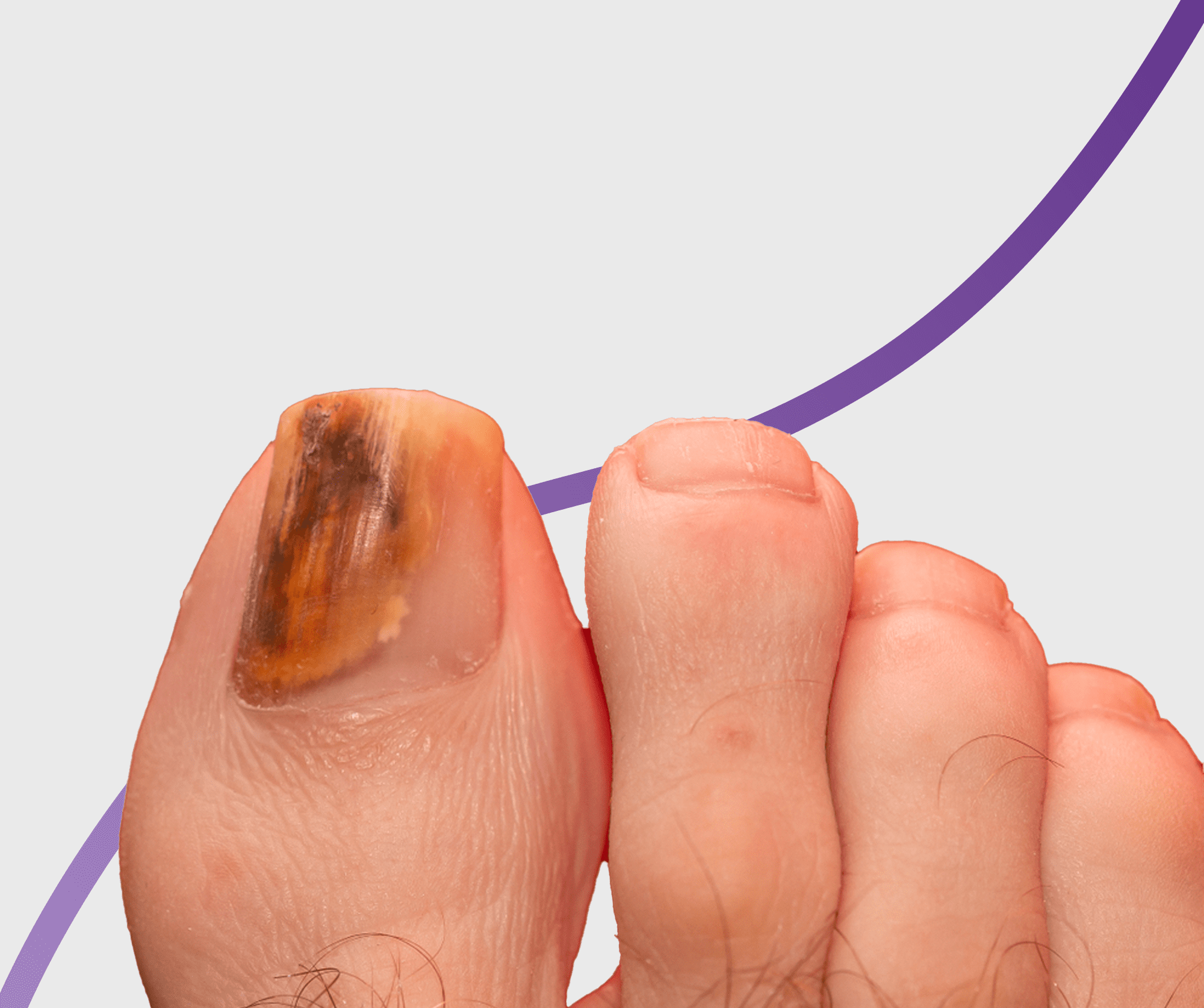
Fungal nail infections are often responsible for yellow toenails, particularly when the nails become thick or crumbly. But yellowing isn't always caused by fungus. It may be staining from nail polish, damage from an injury or pressure from shoes. Changes associated with ageing, nail psoriasis, diabetes and poor circulation are other possible explanations. There's also a rare condition called yellow nail syndrome. Looking at the nail itself can help narrow down which cause is more likely.
One common cause of yellow toenails is onychomycosis, the medical name for a fungal nail infection. The fungi grow in warm, damp shoes and often spread to the nail from athlete’s foot. According to the NHS, the infection often spreads across the nail and can turn it thicker and white or yellow. The affected nail may also crumble or lift. Brisbane’s humid summers and long days in closed work shoes keep feet in moist environments, which suits the fungi behind most fungal nail infections.
You might notice a yellow stain when you remove nail polish that's been on your toenails for several weeks. Darker and brighter colours are more likely to leave pigment behind, especially if you haven't used a base coat. The staining affects the nail plate, which is made from a protein called keratin. Unlike some fungal nail infections, the nail generally stays smooth and flat. The discolouration should gradually move towards the tip as the nail grows.
A knock or a dropped object can damage the nail and the nail bed beneath it. Repeated pressure from tight fitting shoes, or from long runs in shoes that don’t fit properly, does the same damage more slowly. Either way, the nail often grows back thick and discoloured. This kind of change usually shows up on one toe.
Some older adults find their toenails become harder to cut as the years go by. The nails may grow more slowly, thicken and develop a dull yellow colour. It's not always easy to tell whether these changes are age-related or caused by something else. A fungal nail infection can also thicken the nail, sometimes alongside changes that have developed with age.
Psoriasis can affect the skin and the toenails, although the changes don't always look the same. Across the nail, you might see small pits or yellow-brown patches. The nail can also start lifting away from the nail bed. This is sometimes mistaken for a fungal nail infection, as both conditions can cause changes to the nail's appearance. The Feet People explains more about the connection between psoriasis and the feet.
A change in toenail colour shouldn't be ignored if you have diabetes. Fungal infections are more common in people with diabetes or reduced blood flow to their feet, and existing nail problems can be harder to manage. Getting a discoloured nail checked early gives a podiatrist the chance to look for signs of infection or other changes. You can also read more about how diabetes affects the feet.
This cause is rare. DermNet describes yellow, slow-growing nails that usually appear alongside lymphoedema swelling and respiratory problems. It is a condition for a GP to assess and manage.
The look of the nail and how the change began point to a likely cause, but a fungal infection is only confirmed by examining the nail and sometimes testing a sample. A GP will sometimes send a nail sample for testing before prescribing antifungal medication. Use the patterns below as a rough guide only. They can’t diagnose the cause.
| What You Notice | Likely Cause |
| Thick, crumbly nail that has started to lift, with itchy or peeling skin between the toes | Fungal infection is likely |
| Flat, smooth nail with an even stain after months of polish | Polish staining |
| One nail changed after a knock, or after pressure from long runs or tight shoes | Injury |
| Several nails thickening slowly over years | Ageing, sometimes with fungus as well |
| Pitting or patches, with psoriasis on the skin | Nail psoriasis |
| All nails yellow, with swelling or breathing problems | See a GP |
Nails turning a different colour need a different guide: the page on brown, white or brittle toenails covers those changes, including black nails.
A yellow toenail is worth having checked if it keeps changing, becomes thicker or starts to crumble. The same applies if the colour doesn't fade after you've stopped wearing nail polish. Arrange an appointment with a podiatrist if you notice any of the following:
If all your nails have turned yellow and you also have swelling in your legs or breathing problems, see a GP first, as an underlying medical condition may be involved. The same applies if your skin or eyes have yellowed.
A nail stained by nail polish needs different attention from one that's thickened by fungus or damaged by an injury. At The Feet People, the podiatrist examines the nail and the skin around your toes, as well as asking about your medical history. These details help establish what's behind the colour change. Depending on the findings, you may be offered one of the treatment options below or referred to your GP for further investigation.
For a confirmed or likely fungal nail infection, The Feet People uses PACT. Because fungal toenail infections often begin as athlete’s foot, the podiatrist looks at the skin between the toes as well as the affected nail. What happens during an appointment, and who it suits, is set out on the PACT fungal nail treatment page.
Cutting a thickened toenail at home isn't always easy, particularly when the nail has become hard or brittle. A podiatrist can trim it back and reduce its thickness using clinical tools. This type of care is often used for nails affected by ageing or an old injury, as well as those with a fungal nail infection. The skin and nail appointment at The Feet People includes this type of nail care.
The podiatrist checks the nail before applying Keryflex. Any signs of infection or other problems need to be identified before the resin is applied. Keryflex forms a layer over the nail surface, changing the appearance of damaged or discoloured nails. You can read more about the process and which nails may be suitable on the Keryflex nail restoration page.
The Feet People has two clinics to choose from. The Brisbane City podiatry clinic is on the ground floor at 344 Queen Street, and the Newmarket clinic is at Newmarket Village, 114/400 Newmarket Rd. Each location page lists opening hours and directions. Book online, or call the clinic to arrange a time.
A polish stain or injury mark grows out as the nail grows. A fungal nail only clears as healthy nail grows from the base, according to the NHS.
A fungal nail infection can spread from one toenail to another, and sometimes to the surrounding skin, causing athlete's foot. The infection can also pass between people through shared towels or shoes, or by walking barefoot on damp floors in communal showers. Yellowing caused by nail polish, an injury or ageing isn't contagious.
Vinegar and tea tree oil are often suggested as home remedies for toenail fungus, but there's little evidence that they clear the infection. They won't change yellowing caused by an injury or ageing either. If you suspect a fungal nail infection, a podiatrist can discuss what clears toenail fungus and which approach may be appropriate.
Polish hides the colour but makes changes harder to track, and long polish wear is itself a cause of staining. Have the nail checked first, then look at ways to improve how toenails look.
Lightly filing the surface of a yellow toenail may be possible, but avoid digging underneath it. This can damage the nail bed and allow an infection to develop. The risk is greater if you have diabetes. If a nail has become thick and difficult to manage, a podiatrist can reduce its thickness using clinical tools.
They can. Some liver and thyroid conditions are linked with yellow nails. Lung conditions are a less common link. The change usually affects all the nails and comes with other symptoms, so a GP is the right person to assess it.
Our feet are the foundation for the entire body, so it's important that they have enough strength to tolerate our activity levels. Use
these three exercises to help strengthen your feet.

Not everyone needs orthotics, but they can play an integral role in treating or relieving pain in several foot and lower limb conditions.

The heat and humidity of an Australian summer makes it a prime time for issues to arise, so our newest podiatrist Lucy has put together
seven helpful tips to keep your feet healthy and problem free throughout summer.
| Monday | 7:40am - 6:00pm |
| Tuesday | 7:40am - 6:00pm |
| Wednesday | 7:40am - 6:00pm |
| Thursday |
7:40am - 6:00pm |
| Friday | CLOSED |
| Saturday | CLOSED |
| Sunday | CLOSED |
Ground Floor, 344 Queen Street,
Brisbane City QLD 4000
| Monday | 7:40am - 6:00pm |
| Tuesday | 7:40am - 6:00pm |
| Wednesday | 7:40am - 6:00pm |
| Thursday |
7:40am - 6:30pm |
| Friday | 7:40am - 5:00pm |
| Saturday | 7:40am - 4:30pm |
| Sunday | CLOSED |
Newmarket Village, 114/400 Newmarket Rd, Newmarket QLD 4051