
Your knee joint plays a crucial role in your ability to move, designed to keep you moving smoothly and painlessly during weight-bearing activities like walking or running. The knee is one of the most complex joints in your body, meaning that knee pain and problems can have a wide range of causes - from damage to the joint itself, to the ligaments that surround and stabilise the knee joint, and beyond. This makes getting a formal diagnosis with a knee pain specialist extremely important in all cases of knee injury or discomfort.
Understanding knee anatomy
The knee is a complex hinge joint, connecting your thigh bone (femur) to your shin bone (tibia), with the knee cap (patella) sitting at the front to protect the joint. The knee joint structure is stabilised by four ligaments, the:
- medial collateral ligament
- lateral collateral ligament
- anterior cruciate ligament
- posterior cruciate ligament
These ligaments work together to provide strength and prevent excessive movement that could lead to the knee being injured. Within the joint, soft cartilage, including the meniscus, lines the bone ends to absorb shock and cushion the bones during activity.
Common causes of knee pain
While it can develop for a variety of reasons, the most common causes of knee pain are injury, overuse, or degenerative joint disease. Acute injuries are a frequent cause, particularly damage to the anterior cruciate ligament (ACL) or posterior cruciate ligament (PCL), which often occur during sport, sudden twisting movements, or falls. These injuries can lead to sharp pain, swelling, and difficulty walking or weight-bearing.
Degenerative joint disease, such as knee osteoarthritis, becomes a more common cause as we age. It occurs when the protective cartilage within the knee joint gradually wears down, resulting in stiffness, inflammation, and ongoing pain as the bones begin to rub together.
Other frequent causes of knee pain include a torn meniscus, torn ligaments, joint dislocation, and the development of bone spurs. These conditions can affect the way the knee moves and bears load, often leading to pain during everyday activities such as walking, climbing stairs, or standing for long periods.
Knee pain conditions we commonly treat
Our podiatrists see and treat a range of knee conditions every day, which often include:
Knee bursitis
Knee bursitis, which occurs when one of the fluid-filled sacs around the knee becomes irritated or inflamed. It often feels like swelling, warmth, and tenderness over the front or sides of the knee, with discomfort that worsens when kneeling or bending.
Osgood-Schlatter disease
Osgood-Schlatter disease, which is not actually a disease, but a growth-related condition that affects adolescents, caused by repeated pulling of the patellar tendon on the shinbone. It typically feels like pain, swelling, and tenderness just below the kneecap, especially during running, jumping, or sport.
A stress fracture
A stress fracture, which is a small crack in the bone caused by repetitive load rather than a single injury. It often presents as a deep, localised ache that worsens with activity and improves with rest, sometimes accompanied by swelling or tenderness over a specific spot.
Knee osteoarthritis
Knee osteoarthritis, which is a degenerative joint condition where cartilage gradually wears down. It commonly feels like stiffness, aching, or grinding in the knee, with pain that may worsen after activity or long periods of sitting and improve slightly with gentle movement.
Iliotibial band syndrome
Iliotibial band syndrome, which occurs when the band of tissue running along the outside of the thigh becomes tight or irritated near the knee. It is usually felt as sharp or burning pain on the outer side of the knee, often triggered by repetitive bending during activities like running or cycling.
Pregnancy knee pain
Pregnancy knee pain, which is often linked to hormonal changes, altered posture, weight changes, and increased joint laxity. It commonly feels like aching, instability, or soreness around the knee, particularly when standing, walking, or going up and down stairs.
_520x520a.png)
Other knee pain conditions we often see include damage to the anterior or posterior cruciate ligament, muscle injuries including a damaged or torn quadriceps, and cartilage-related problems such as meniscal tear, arthritis or joint degeneration following an injury. Some conditions develop gradually, while others are linked to a specific incident or load change.
Brisbane clinic locations & opening hours
Our skilled team treats knee pain at both of our convenient Brisbane locations - in the CBD and Newmarket. Find clinic details and opening hours below:
Brisbane CBD clinic information
-
Mobile: 0483932145
Phone: (07) 3356 3579
Fax: (07) 3220 3851
Address: Ground Floor/344 Queen Street, Brisbane QLD 4000 -
Operating Hours:
Monday: 7:40am – 6:30pm
Tuesday: 7:40am – 6:00pm
Wednesday: 7:40am – 6:30pm
Thursday: 7:40am – 6:00pm
Friday: Temp Closed
Saturday: Closed
Sunday: Closed
Newmarket clinic information
-
Mobile: 0483932146
Phone: (07) 3356 3579
Fax: (07) 3220 3851
Address: Shop 114, Newmarket Village, 400 Newmarket Road, Newmarket QLD 4051 -
Operating Hours:
Monday: 7:40am – 6:00pm Tuesday: 7:40am – 6:00pm Wednesday: 7:40am – 6:00pm Thursday: 7:40am – 6:30pm Friday: 7:40am – 5:00pm Saturday: 7:40am – 4:30pm Sunday: Closed
How we diagnose, assess and treat knee pain
When you come in with knee pain, we start with a thorough conversation about your symptoms, daily activities, and any recent problems or changes in your load (the strain and pressure you're putting on your body). Part of our expert diagnosis includes a thorough physical examination and physical assessment, including looking at how your knee moves, how your leg bones (including the thigh bone and shin bone) are aligning, and whether any structures are irritated when putting pressure through the joint. Remember that the knee is a complex part of the human body, supported by four ligaments, surrounding muscles, blood vessels, and cartilage, meaning a proper diagnosis is essential so you can get the right and timely care.
Additionally, if needed, we may use several tests or refer you for imaging and other tests to rule out issues such as ligament strain, cartilage damage, or the involvement of a previous knee injury that hasn’t healed properly.
Treatment options for knee pain
Every patient gets a customised treatment plan from their podiatrist, based on the source and severity of their pain. This may include:
In early or less complex cases, treatment may focus on settling irritation (including inflammation) and restoring movement so you can return to your normal activities comfortably.
For more complex presentations, including severe injuries, we'll ensure you have the right diagnosis and keep you supported at every stage - from conservative (non-invasive, non-surgical) care through to helping you recover following knee surgery, if required. We liaise closely with other health professionals during your care, with our focus always being on restoring your comfort, confidence, and function.
Knee arthritis management
Managing knee arthritis, including knee osteoarthritis, involves a comprehensive approach to reduce pain and improve joint function. At the onset of a knee injury, applying the RICE method (mentioned above) can help diminish swelling and relieve pain. Alongside your podiatrist, you may also work with an occupational therapist or other arthritis specialist to discuss physical therapy, medication, and lifestyle adjustments. In cases where knee arthritis leads to severe pain or loss of mobility, total knee replacement surgery may be recommended to restore function and relieve pain.
To better understand knee arthritis, you should know that this disease affects cartilage within the knee joint. Over time, your cartilage starts to thin and may completely wear away in extreme cases, leading to pain, stiffness, and swelling. It’s helpful to know that arthritis literally means inflammation, and symptoms often fluctuate depending on activity and load.
Why do we recommend early treatment of knee pain?
We strongly encourage addressing knee pain early because untreated symptoms can progress and become harder to manage over time. What starts as mild discomfort can lead to altered movement patterns, increased joint stress, and ongoing irritation of structures like cartilage or tendons, sometimes resulting in trouble walking or activity avoidance.
Seeking knee pain treatment immediately when symptoms begin helps to prevent long-term issues, reduces the risk of worsening injury, and allows us to guide healing before compensation patterns develop.
Preventing future knee injuries
Preventing future knee issues starts with understanding how your body moves and where excess load is coming from. Addressing muscle imbalances, improving control around the knee, and ensuring your lower limbs absorb force efficiently all help protect vulnerable structures like the patellar tendon, hamstring muscles patellar tendon, and surrounding joint surfaces. Early intervention, if symptoms such as swelling, stiffness, or a snapping sensation appear, is also an important part of prevention.
Regular exercise that targets the hamstring muscles and quadriceps helps stabilize the knee joint and protect against injury. Incorporating proper warm-up routines before physical activity, using supportive equipment like knee braces or orthotics, and avoiding prolonged periods of sitting or standing can all reduce stress on the knee. Maintaining a healthy weight and practicing safe techniques for lifting and movement further decrease the risk of knee pain and injury.
Ongoing support and care for knee pain
Knee pain often benefits from ongoing monitoring, particularly if symptoms fluctuate or are linked to long-term joint changes. Some people may experience swelling from extra fluid in the joint, while others need continued support following knee surgery or recurrent flare-ups. We may recommend simple measures such as ice packs, an ice pack applied after activity, or short-term use of an elastic bandage or compression stocking to support the affected area during recovery.
Education about knee anatomy, injury prevention, and self-management strategies empowers you to take control of your knee health. With consistent support and expert guidance, you can reduce the risk of future injuries, manage existing knee pain, and enjoy a pain-free, active lifestyle.
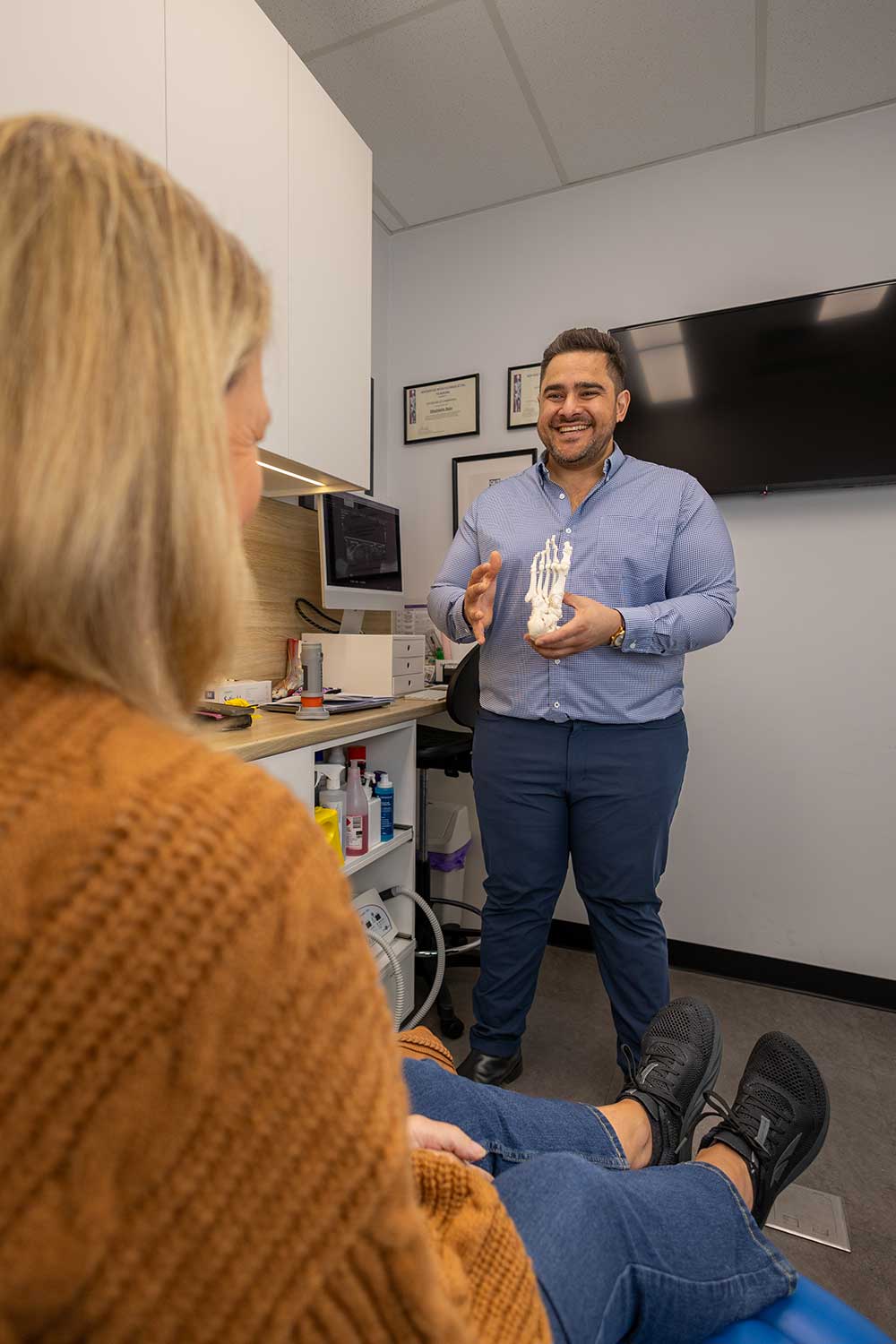
Book an appointment to get knee pain treatment in Brisbane
If knee pain is limiting your movement or confidence, we’re here to help. Book an appointment with our Brisbane podiatrists so we can assess your knee, identify the underlying issue, and guide you toward safe, effective recovery.
FAQs
Can a podiatrist help with knee pain?
Yes! Podiatrists assess how your feet, legs, and movement patterns influence knee load and can address biomechanical contributors to pain.
How do foot problems cause knee pain?
Foot alignment and function affect how force travels through the legs, which can overload the knee joint and surrounding tissues over time.
What’s the difference between podiatry and physiotherapy for knee pain?
Podiatry focuses on lower-limb biomechanics and load management from the ground up, while physiotherapy often targets strength and movement locally around the knee. Both can be complementary.
Will I need orthotics for knee pain?
Not everyone does, but orthotics may help in cases where foot mechanics are contributing to knee overload or poor force distribution.
How long does knee pain take to improve with treatment?
Improvement depends on the cause and severity, but many people notice gradual changes within weeks, while longer-standing or structural issues may take months to fully settle. If you have a severe case with persistent pain and require a knee replacement, this can lead to a lengthy recovery.