
Lower back pain makes the simple parts of life difficult - from getting out of a chair to walking, working or sleeping comfortably. Sometimes, low back pain begins after a clear injury. At other times, it builds gradually, and there may be no single event that explains it. Our podiatrists work with patients with a range of lower limb and low back pain symptoms.
Experiencing pain in the lower back can not only be physically crippling or uncomfortable, but also affects your ability to to perform simple daily movements. While the feet are far from the lower back, the way your feet, ankles and legs move can influence how load travels through the legs and how your body responds when you stand and walk. If your discomfort is worse after long periods on your feet, or began after a change in footwear, walking or a lower-limb injury, a podiatry assessment may be useful.
Here at The Feet People, we assess whether foot and lower-limb factors may be contributing to your lower back pain. We offer treatment for foot, ankle or lower leg related problems that may be worsening you symptoms, often working alongside a GP, physiotherapist or other spinal specialist to provide comprehensive, holistic care of the problems you're experiencing. If your symptoms suggest that your back itself needs other medical, we will explain this and refer you to the right practitioner to assist in your treatment.
What Is Lower Back Pain?
To understand what lower back pain is and how it's caused, let's quickly review the function of and structures within your lower back. Your low back is the area between the bottom of the ribs and your buttocks. Its five vertebrae form the lumbar spine. Between the vertebrae are the discs that help absorb load, while facet joints guide movement. Ligaments, soft tissue, nerves and layers of muscles help support and move the area.
The spine is strong and is designed to bend, twist and carry load. Spinal pain (pain at or around your spine and back) can have many influences, so different pain conditions can feel very similar. A sore back does not automatically mean there is disc damage or that the spine is “out of place”. In fact, it is often not possible or necessary to identify one exact cause.
Lower back pain may be described as:
- acute lower back pain, lasting less than six weeks
- subacute pain, lasting between six and twelve weeks
- chronic pain, continuing for more than twelve weeks
These timeframes describe how long the problem has lasted. They do not tell us how severe it is or whether it will recover.
Common Causes of Lower Back Pain
The most common cause of lower back pain is described as non-specific back pain. This means the discomfort changes with posture, position or activity, but no serious disease or single damaged structure has been found.
Possible common causes and contributors include:
- a strain or other soft tissue injury involving the back muscles or ligaments
- irritation around the discs or facet joints
- a disc injury or disc herniations that irritate nearby nerves
- doing much more lifting, bending, exercise or manual work than usual
- prolonged sitting or staying in one position for long periods
- reduced strength or mobility after illness, injury or inactivity
- a sedentary lifestyle
- spinal stenosis or other degenerative conditions
- stress, disrupted sleep or worry about activity, which can increase the effect pain has on the body
Some people notice pain lower in the back after standing or walking. A previous foot, ankle, knee or hip injury can change how someone moves, at least for a time. Foot posture, ankle stiffness, different limb lengths, footwear and work surfaces may also change loading through the joints and muscles above. The body may adapt to these changes without developing symptoms, so they should not automatically be labelled as the sole cause.
Some of the most common conditions considered during assessment include muscle or ligament strain, irritation around the facet joints, a disc-related problem, nerve-root irritation and spinal stenosis.
Common Low Back Pain Symptoms and Different Types of Pain
Low back pain symptoms vary considerably. Common symptoms include:
- an ache, tightness or sharp discomfort in the lower back
- stiffness or reduced mobility
- pain with bending, lifting, sitting, standing or changing position
- muscle guarding or spasms
- discomfort around the buttock, pelvis or upper thigh
- pain symptoms that improve or worsen depending on activity
Mechanical Pain
Mechanical pain is pain that changes with movement, posture or physical load. It may become worse with activities such as bending, lifting, sitting or standing. The discomfort can involve sensitive muscles, ligaments, discs or joints, although it is often impossible to identify one exact structure causing it. The discomfort commonly stays around the lower back, buttocks or upper thigh.
Radicular Pain, Nerve Pain and Sciatica
Radicular pain occurs when a nerve root near the spine becomes irritated or compressed. It may feel sharp, burning or electric and can travel below the knee. Numbness, tingling or weakness may also occur.
Sciatica is a familiar name for this pattern when symptoms follow the pathway that forms the sciatic nerve. The irritation usually begins at a nerve root in the lower spine, rather than in the sciatic nerve itself. Not every ache in the buttock or leg has this cause, so a proper assessment matters. Nerves can also refer symptoms in patterns that are not identical from one person to another.
Chronic Pain
When discomfort continues, the body's nervous system can become more protective and sensitive. This does not mean the pain is imagined. It means the experience may be influenced by several things, including sleep, stress, confidence with activity, physical capacity and the original injury. This can lead to chronic (ongoing) pain.
In cases of chronic pain, an effective treatment plan for persistent symptoms therefore considers the whole person, not just the symptoms or one scan result.
When Lower Back Pain Needs Urgent Medical Care
Most episodes of low back pain are not caused by a dangerous problem. However, pressure on the spinal cord or the bundle of nerves below it can require emergency treatment.
Go to an emergency department or seek urgent medical care if back pain is accompanied by:
- new difficulty controlling your bladder or bowels
- numbness around the genitals, buttocks or inner thighs
- rapidly increasing weakness or numbness in both legs
- severe symptoms after a fall, collision or other major injury
- fever, chills or feeling seriously unwell
- sudden severe back or abdominal pain with faintness or a pulsing feeling
Arrange prompt assessment by your GP if you have a history of cancer, unexplained weight loss, osteoporosis, immune suppression, recent infection or pain that is constant
Brisbane Clinic Locations & Opening Hours
We treat lower back pain at both of our Brisbane clinics, in the CBD and at Newmarket Village. Clinic details and opening hours are below.
Brisbane CBD clinic information
-
Mobile: 0483932145
Phone: (07) 3356 3579
Fax: (07) 3220 3851
Address: Ground Floor/344 Queen Street, Brisbane QLD 4000 -
Operating Hours:
Monday: 7:40am – 6:30pm
Tuesday: 7:40am – 6:00pm
Wednesday: 7:40am – 6:30pm
Thursday: 7:40am – 6:00pm
Friday: Temp Closed
Saturday: Closed
Sunday: Closed
Newmarket clinic information
-
Mobile: 0483932146
Phone: (07) 3356 3579
Fax: (07) 3220 3851
Address: Shop 114, Newmarket Village, 400 Newmarket Road, Newmarket QLD 4051 -
Operating Hours:
Monday: 7:40am – 6:00pm Tuesday: 7:40am – 6:00pm Wednesday: 7:40am – 6:00pm Thursday: 7:40am – 6:30pm Friday: 7:40am – 5:00pm Saturday: 7:40am – 4:30pm Sunday: Closed
Brisbane & Newmarket Services
Residents on Brisbane's northside and Brisbane seeking relief from lower back pain can find comprehensive care at Newmarket and Brisbane. Whether you've recently strained your back or have been enduring persistent discomfort for months, possibly with nerve related pain extending into your leg, the team takes a thorough approach. By examining how your feet and walking style impact your spine, they develop a personalised treatment plan.
Can a Podiatrist Treat Lower Back Pain?
As podiatrists, we do not diagnose conditions directly affecting the spine. Our role is to find whether something in the feet, ankles, knees or lower legs may be changing the way you stand, walk or absorb load, therefore contributing to your back pain symptoms.
Podiatry may be relevant when:
- discomfort increases during standing or walking
- symptoms began after a foot, ankle or leg injury
- one side moves or bears weight differently from the other
- restricted ankle or foot joints change your stride
- your work involves long periods on hard floors
- changing footwear has affected your symptoms
- another practitioner has asked for a gait or lower-limb assessment
This is only one part of the picture. Depending on your symptoms, many patients need their care led by a GP, neurologist or other specialist, particularly when pain lower down the limb is accompanied by tingling, altered reflexes or weakness.
How We Assess Lower Back Pain and Lower-Limb Movement
Your podiatrist will complete a thorough exam, including understanding when the problem started, what makes it better or worse, how it affects daily life and whether there are any warning signs. We also ask about previous injury, work, exercise, footwear and care you have already received.
We then consider your risk factors for slower recovery, including repeated episodes, fear of activity, poor sleep and the effect the problem is having on work or home life. The physical assessment may include:
- observing your posture and walking pattern
- assessing movement at the feet, ankles, knees and hips
- checking relevant joints for stiffness or asymmetry
- comparing strength and control between sides
- considering whether a meaningful leg-length difference may be present
- examining your footwear and the surfaces on which you spend time
- using video gait analysis or in-shoe pressure testing when the findings could change the plan
We also screen for patterns that do not fit a straightforward lower-limb problem. This includes low back pain symptoms that suggest irritation of the nerves, a significant disc injury or spinal stenosis. If these findings need a medical diagnosis, imaging or examination of the lumbar spine, we will refer you rather than claiming that the answer lies in your feet.
This helps us treat what is relevant within podiatry and avoid delaying care for problems involving the spine or nearby nerves.
Do I Need a Scan for Lower Back Pain?
This is typically indicated by your GP or specialist and not on our behalf. Scans are important when there are warning signs of a fracture, infection, or serious nerve compression. For routine acute lower back pain without these features, early imaging often does not change management or how you recover.
Scans of the spine also show common age-related findings in people who have no pain. Disc bulges, disc herniations and changes in the facet joints may appear on a report without being the underlying cause of a person's symptoms. Terms such as disc damage can sound frightening even when the finding is not dangerous.
Your GP or spinal clinician can decide whether an X-ray, CT or MRI is appropriate. The decision should be based on your history and examination, not simply on how intense the pain feels.
Lower Back Pain Treatment Options We Provide
The aim is to understand what is modifiable, improve comfortable activity and help you return to your normal routine. If lower-limb factors are contributing to your pain or symptoms, your plan may include the following treatment techniques.
Education and Activity Advice
For most uncomplicated episodes, staying gently active is more helpful than prolonged bed rest. This may mean changing a painful task for a few days and then building it back up, rather than avoiding all activity until every symptom has disappeared.
We can discuss pacing, standing breaks, work surfaces and footwear. If you also have a sedentary lifestyle, regular changes of position can help you avoid prolonged sitting without turning posture into something to fear.
Footwear Advice
Shoes can change comfort and stability during walking or long shifts on hard surfaces. We may suggest features such as an appropriate fit, secure fastening, cushioning or a stable sole, depending on what we find.
There is no single “best” shoe for every sore back. Footwear should address a clear need and be comfortable enough to support normal activity. We also offer custom footwear modifications and take prescriptions for customised shoes, as we understand there are a variety of foot types and problems that do not fit in a "one size fits all" box.
Orthotics When Lower-Limb Loading Is Relevant
Orthotics may be considered if the assessment identifies a foot or gait factor that is plausibly adding to the problem. They can change how load is distributed through the foot and lower limb. We only recommend custom foot orthotics that are prescribed with specific features and a clear purpose in mind. We then review and may modify your orthotics based on changes in your comfort, function and walking.
Strengthening Exercises and Mobility Work
Reduced endurance (strength) in the foot, calf, hip or core muscles may affect how someone handles work, walking or sport. Suitable strengthening exercises can help rebuild capacity around the relevant muscles and joints. Strong muscles cannot prevent every flare-up, but they can help the body tolerate daily demands.
We may provide lower-limb exercises within our podiatry scope. When the programme needs to focus on the back, spinal mobility or broader rehabilitation, a physiotherapist or exercise physiologist will lead that side of your rehab.
Dry Needling, Soft Tissue Care and Manual Therapy
Dry needling or soft tissue techniques may be used for tight or overworked muscles in the feet and lower limbs. Manual therapy may also be used to improve movement in relevant foot and ankle joints. These hands-on options may support both your movement and comfort.
Referral and Shared Care
Some patients need care from several practitioners. We may communicate with your GP, physiotherapist, exercise physiologist, pain clinician or another member of your healthcare team.
Medical care may include medicines or, in selected cases, injections. Surgery is uncommon for non-specific back pain but may be discussed for severe nerve compression, progressive neurological changes or a structural problem that has not improved with appropriate non-surgical care. Surgery is provided by a spinal surgeon, not at our clinic.
Advanced techniques are not automatically more effective. The right care is the simplest safe approach that matches the diagnosis, your needs and the best available evidence.
Managing Chronic Lower Back Pain
Persistent discomfort often needs a broader plan than repeatedly treating one tight muscle or joint. Chronic pain is real, but its intensity does not always match the amount of tissue injury that can be seen on a scan.
Management may include graded activity, strengthening, improved sleep, pacing, support for stress or mood, and treatment of any clear physical contributors. The goal is to build confidence, function and ways to manage flare-ups so the problem has less control over everyday life.
Why Early Assessment Can Help
Early assessment can screen for warning signs, provide reassurance and stop a short-term problem from leading to unnecessary fear and inactivity. It can also identify whether podiatry is likely to help.
An assessment can help you:
- understand your pain symptoms without assuming the worst
- recognise which movement and activity are safe
- modify work, walking or exercise while an injury settles
- address relevant foot, footwear or lower-limb factors
- begin an effective treatment plan based on function, not just a scan
- know when medical review or physiotherapy is needed
Early care does not guarantee that a new episode will disappear immediately. It gives you a sensible plan for recovery and reduces the chance of spending time and money on treatment that does not match the problem.
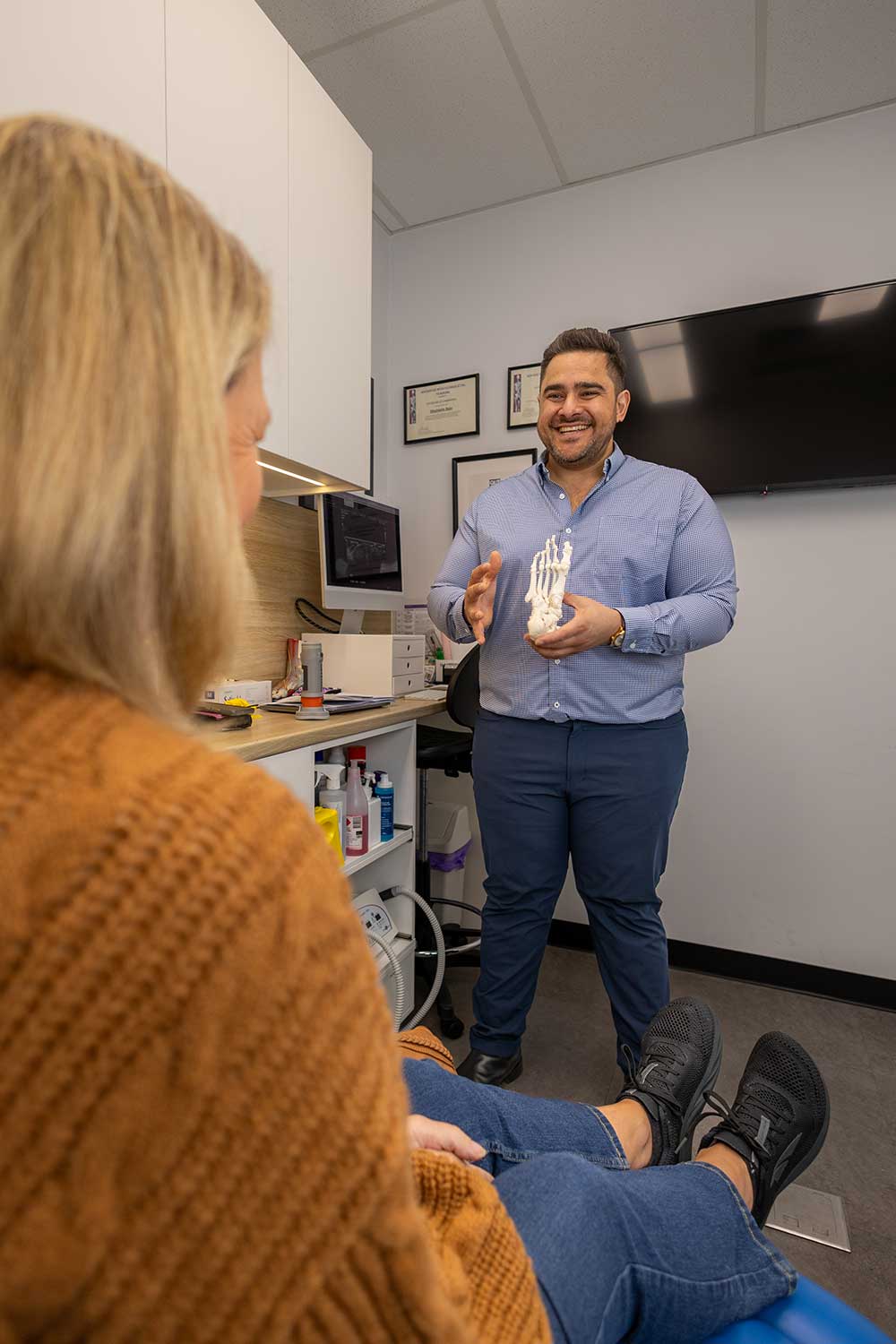
Book an Appointment for Lower Back Pain Treatment in Brisbane
If your lower back symptoms become worse with standing or walking, or you think your feet and lower limbs may be contributing, our podiatrists can assess how you move and explain whether podiatry has a useful role. We focus on factors within our scope and work with other health professionals when needed. Appointments are available at our Brisbane CBD and Newmarket clinics.
FAQs
How Are the Feet Connected to the Lower Back?
The feet are the first part of the body to meet the ground when you walk. Movement at the foot and ankle can influence what happens at the knees, hips and pelvis. If one area is stiff, sore or moving differently after an injury, other areas may adapt.
This connection does not mean that flat feet automatically cause lower back pain. It means the lower limbs are worth assessing when symptoms are closely linked to standing, walking, footwear or a previous lower-limb problem.
Do Orthotics Help Lower Back Pain?
Sometimes, depending on what is happening with your foot and leg biomechanics and what your symptoms are when it comes to your lower back. We take this on a case by case basis when examining your symptoms, diagnosis, work habits, and several other factors. Orthotics are most reasonable when there is a clear foot, leg or gait issue and changing it improves comfort or function.
Orthotics typically form one part of care, alongside appropriate activity, exercise or other treatment.
What Is the Difference Between Lower Back Pain and Sciatica?
Lower back pain may remain around the waist, pelvis or buttocks. Sciatica describes symptoms that travel along the pathway associated with the sciatic nerve, often into one leg and sometimes into the foot.
The pattern may include nerve pain, tingling, numbness or weakness. Seek prompt assessment if these signs are new, getting worse or changing how you walk.
Is Sitting Always Bad for the Lower Back?
No. Sitting is a normal activity. The issue is often spending long periods in any one position, especially if you are uncomfortable or have little movement across the day.
Changing position regularly and building general activity is usually more practical than trying to hold one “perfect” posture.
How Long Does Lower Back Pain Take to Improve? Is It Possible to Get Lasting Relief?
This really depends on what the cause of your pain is, and your level of severity. A more useful sign of progress is being able to walk, work, sleep and complete daily tasks more comfortably.
Symptoms can fluctuate during recovery. A temporary increase does not always mean that you have caused a new injury. Arrange review if the problem is worsening, is not improving after a few weeks or is having a major effect on your life.
Will I Need Surgery?
Non-surgical lower back pain treatment usually begins with education, staying active and suitable rehabilitation. Medicines may sometimes be used to support activity after discussion with a GP or pharmacist.
Surgery may be considered when there is serious or worsening nerve compression, certain fractures or other conditions that need an operation. Your GP or specialist can explain whether surgical assessment is appropriate.
Can Podiatry Treatment Fix the Root Cause of My Lower Back Pain?
Be cautious with anyone who promises to find and permanently correct one specific cause. Back pain is often affected by a combination of tissue sensitivity, strength, sleep, stress, activity, work and general health. The most effective way to treat it is to identify the factors that matter for you, rule out serious problems and build a plan that improves function as well as pain. This needs to be done together with your GP and back specialist.