
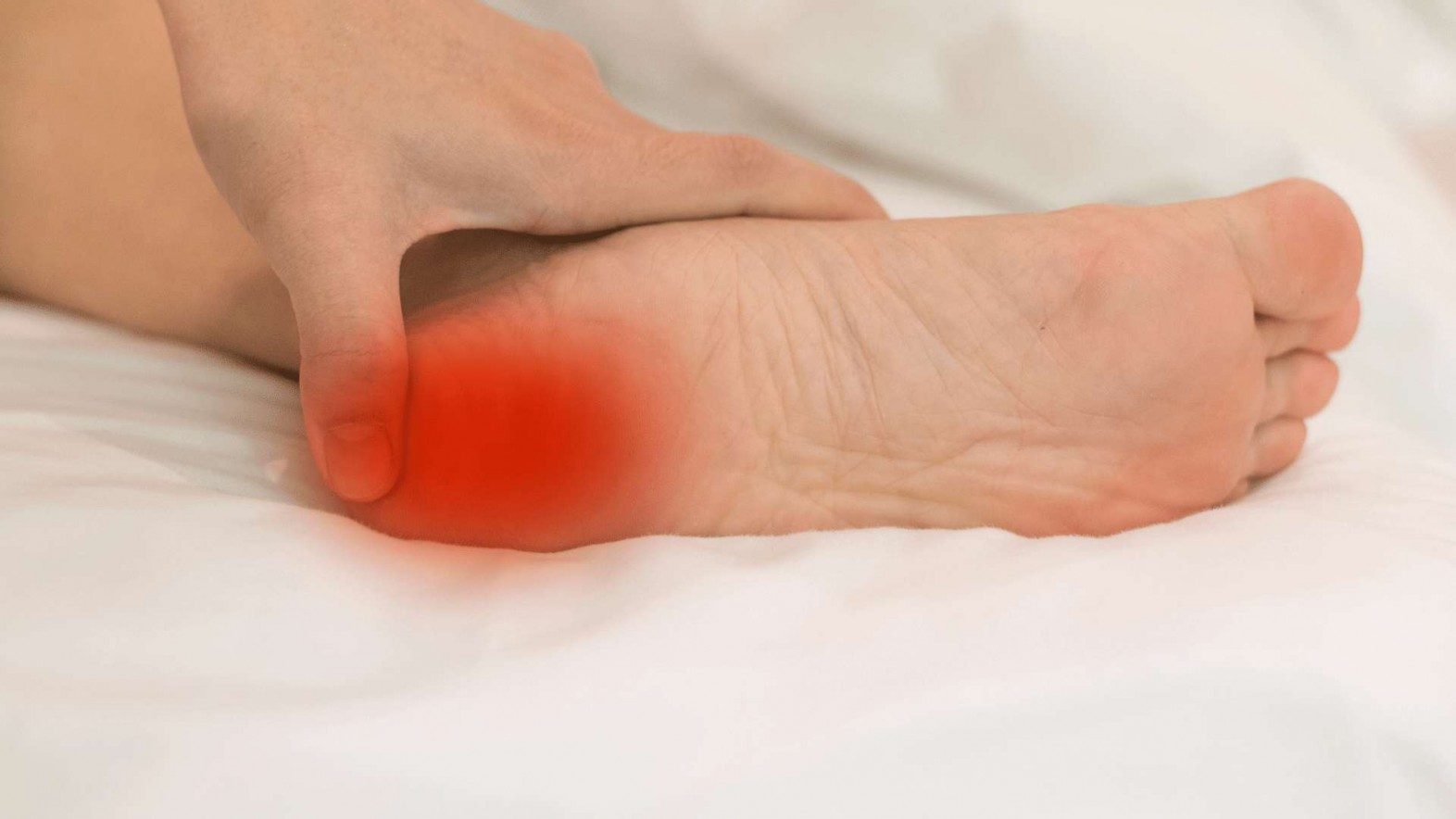
Plantar fasciitis is one of the most common causes of heel pain, often felt as a sharp, stabbing pain at the bottom of the heel when you first stand up in the morning or after sitting for long periods. It occurs when the plantar fascia - a thick band of connective tissue that supports the arch of your foot - becomes irritated or overloaded. Although it can feel extremely painful, plantar fasciitis is highly treatable with the right assessment and a tailored treatment plan. At our Brisbane clinics, we specialise in helping you understand why your fascia is inflamed, what’s contributing to your symptoms, and the most effective ways to relieve pain and keep it gone.
Common causes of Plantar Fasciitis
Plantar fasciitis refers to inflammation, irritation, or degeneration of the plantar fascia, often caused by too much load, poor foot mechanics, or tension in the lower leg. The fascia functions like a shock absorber and stabiliser for your foot. When it is exposed to excessive pressure, repetitive stress, or you have abnormalities in your foot structure, the fascia can become irritated, tight, or overwhelmed, leading to classic plantar fasciitis symptoms. Common causes of plantar fasciitis include:
Overuse or repetitive strain
activities involving repetitive stress, such as running, standing, or walking for long periods, can overload the plantar fascia, causing irritation and inflammation.
Flat feet or high arches
foot types that fall outside the neutral range can increase tension on the fascia a thick supporting structure.
Poor footwear
thin-soled or worn-out shoes, or footwear with poor arch support, can increase strain on the plantar fascia, especially when wearing shoes for work or long days on your feet.
Increased activity or sudden changes in training load
a rapid increase in walking or running intensity can overwhelm the fascia, particularly when the healing process has not had time to keep up.
Tight calf muscles or Achilles issues
tight calves or problems with the Achilles tendon limit ankle movement and can pull excessively, creating a tight plantar fascia that becomes irritated easily.
Excess body weight increasing strain
greater load through the heel bone and arch increases tension on the fascia and is one of the most common risk factors for plantar fasciitis.
Brisbane clinic locations & opening hours
We provide Plantar Fasciitis treatment at both of our convenient Brisbane locations — in the CBD and Newmarket. Find clinic details and opening hours below:
Brisbane CBD clinic information
-
Mobile: 0483932145
Phone: (07) 3356 3579
Fax: (07) 3220 3851
Address: Ground Floor/344 Queen Street, Brisbane QLD 4000 -
Operating Hours:
Monday: 7:40am – 6:30pm
Tuesday: 7:40am – 6:00pm
Wednesday: 7:40am – 6:30pm
Thursday: 7:40am – 6:00pm
Friday: Temp Closed
Saturday: Closed
Sunday: Closed
Newmarket clinic information
-
Mobile: 0483932146
Phone: (07) 3356 3579
Fax: (07) 3220 3851
Address: Shop 114, Newmarket Village, 400 Newmarket Road, Newmarket QLD 4051 -
Operating Hours:
Monday: 7:40am – 6:00pm Tuesday: 7:40am – 6:00pm Wednesday: 7:40am – 6:00pm Thursday: 7:40am – 6:30pm Friday: 7:40am – 5:00pm Saturday: 7:40am – 4:30pm Sunday: Closed
How we diagnose, assess and treat Plantar Fasciitis
Diagnosing plantar fasciitis starts with a thorough evaluation of your symptoms of plantar fasciitis, including when the pain began, what activities worsen it, and whether your first steps in the morning feel like sharp pain. We then examine the heel bone, the thick band of the fascia itself, surrounding muscle tissue, and nearby structures like the Achilles tendon to rule out conditions such as a stress fracture, bony spurs, or nerve involvement.
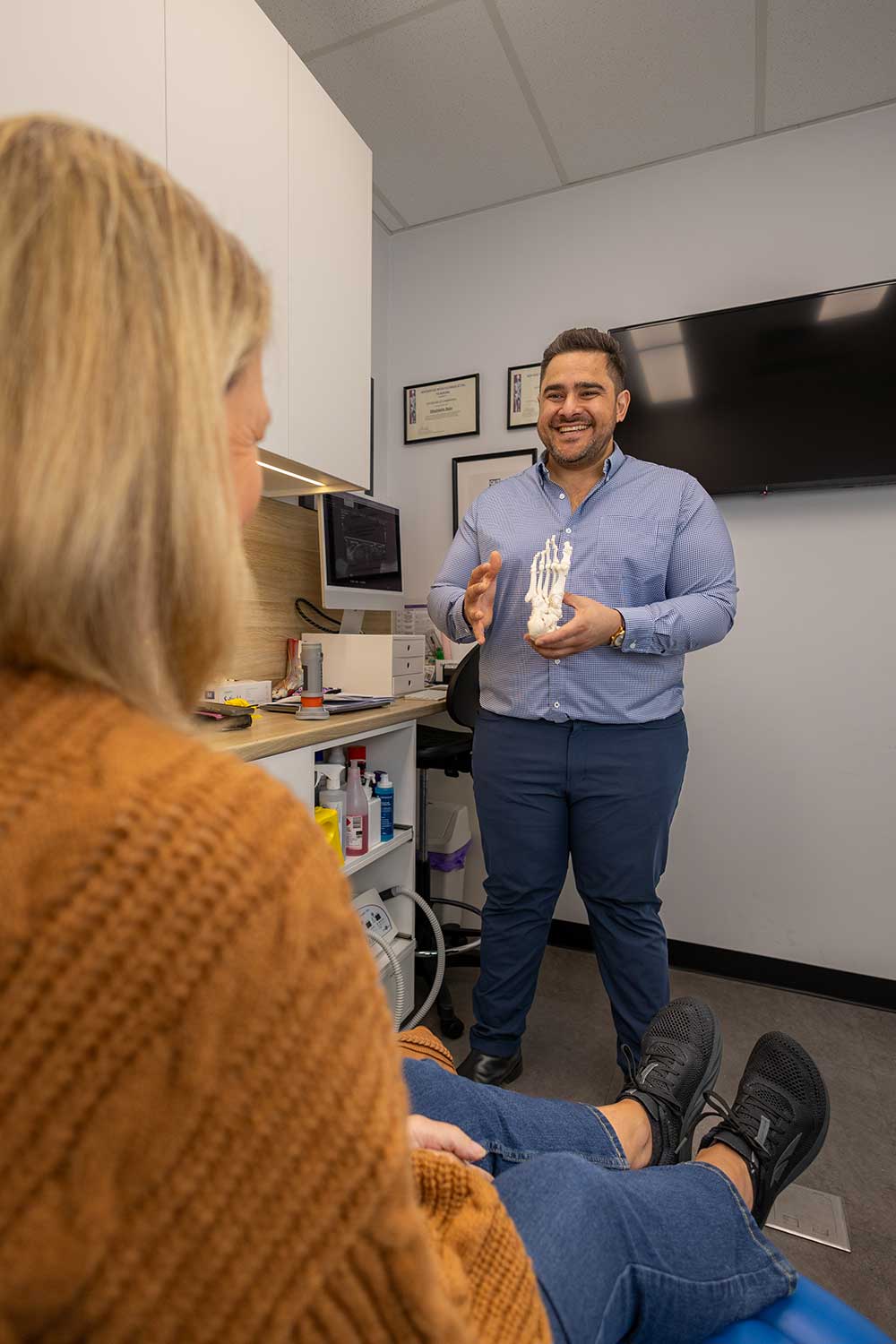
A podiatrist will assess your foot structure, gait, abnormal walking patterns, lower leg mobility, and footwear. This helps identify other risk factors, such as inadequate arch support, muscle tightness, or biomechanical issues contributing to the condition.
Imaging may be recommended in severe cases or when symptoms don’t follow the typical plantar fasciitis presentation. Once we understand the underlying cause of your problem, we create a personalised management plan designed to reduce pain, improve mobility, and support your long-term health and mobility.
Plantar Fasciitis treatment options we provide
Our clinic offers a comprehensive range of treatment options proven to relieve symptoms and support the healing of the plantar fascia:
Why do we recommend early treatment of Plantar Fasciitis?
Early treatment helps calm irritation in the plantar fascia, prevents the condition from becoming chronic, and makes healing faster. Without care, the tissue can become tighter, more inflamed, and increasingly painful - particularly during long periods of standing, walking, or exercise. Delaying treatment increases the risk of developing plantar heel pain, gait compensations, or secondary issues such as calf tightness or Achilles strain.
Treating symptoms early also allows us to address the underlying cause, whether that’s biomechanics, insufficient support for the arches, or workload, so you can return to daily activity with confidence and comfort.
Book an appointment to get Plantar Fasciitis treatment in Brisbane
If your heel pain is affecting your daily life, we’re here to help. Our podiatrists specialise in diagnosing and treating plantar fasciitis, offering personalised care that targets the root of the problem and supports long-term healing. Whether your symptoms are new or you’ve been struggling for months, early care can make a dramatic difference.
Book your appointment today and take the first step toward pain-free movement.
FAQs
How do I know if my heel pain is plantar fasciitis?
Plantar fasciitis typically causes stabbing pain at the bottom of the heel, especially with your first steps in the morning or after resting. Pressing on the fascia or walking barefoot often worsens symptoms. A podiatrist can confirm the diagnosis by checking the fascia, heel bone, and ruling out a stress fracture or nerve-related issues.
What is the fastest way to heal plantar fasciitis?
The fastest recovery combines shockwave therapy, custom orthotics, stretching, strengthening exercises, supportive shoes, and reducing repeated stress. Improving the flow of blood to the area, releasing tight calves, addressing foot biomechanics, and following a targeted care plan usually lead to significant improvement within weeks.
Can plantar fasciitis go away on its own?
Sometimes mild cases improve with rest, but most people require structured support such as physical support through the arch, stretching, or changing footwear. Without help, the fascia may stay irritated, especially if poor support for the arch or workload remains unchanged.
Do orthotics help plantar fasciitis foot pain?
Yes. Custom orthotics and shoe inserts reduce strain on the fascia, provide arch support, improve alignment, and prevent extra pressure on irritated tissue. They are especially helpful for flat feet, high arches, or suboptimal walking patterns.
How long does plantar fasciitis treatment take?
Most cases improve within 4–12 weeks with consistent care. Long-standing or severe cases of plantar heel pain may take longer, but they still respond well to conservative treatments such as shockwave, stretching, orthotics, and physical therapy.
Is plantar fasciitis the same as plantar fasciopathy?
Plantar fasciitis refers to inflammation of the plantar fascia, while plantar fasciopathy describes degeneration of the tissue after long-term overload. Both cause heel pain, and both respond well to the same treatment options, especially shockwave and strengthening.
Can heel spurs (in the heel bone) cause plantar fasciitis?
Bony spurs don’t usually cause pain by themselves. Instead, they form when the plantar fascia pulls repeatedly on the heel bone. Supporting the fascia and improving biomechanics is far more important for pain relief than treating the spur itself.