
Sciatica refers to pain that travels along the path of the sciatic nerve, the largest nerve and longest nerve in the body. The sciatic nerve begins in the lumbar spine, where nerve fibres exit the spinal cord, then runs through the buttock and down the lower leg to the foot.
When there is pressure on the sciatic nerve or irritation of the sciatic nerve roots, people may experience pain, tingling, numbness, or weakness. These sciatica symptoms usually affect one side of the body and can range from mild discomfort to significant pain that interferes with daily life.
Our approach to sciatica treatment (Brisbane) focuses on understanding why the nerve is irritated and guiding you through an effective management pathway.
Introduction to Sciatica Treatment
Sciatica is not a diagnosis itself, but a pattern of symptoms caused by irritation or nerve compression affecting the sciatic nerve. Because this is the main nerve in the body supplying the lower limb, irritation can cause leg pain, foot pain, and altered sensation anywhere along its pathway.
True sciatica occurs when the sciatic nerve roots or surrounding nerves are compressed or inflamed, often due to changes within the spine. This is different from muscular pain or referred pain that can feel similar but has a different root cause.
Common causes of Sciatica Pain
There are several well-recognised causes of sciatica, most involving changes in the spine that place pressure on the nerve. Common underlying causes include:
- Herniated disc or slipped disc, where disc material presses on nearby nerve roots
- Disc bulge or bulging disc that narrows space around the nerve
- Degenerative disc disease, which can irritate nerve roots over time
- Spinal stenosis, where narrowing of the spinal canal compresses nerves
- Piriformis syndrome, where the nerve is irritated as it passes through the buttock
- Repetitive bending, twisting, or heavy manual work
In severe cases, less common causes may also need to be ruled out through careful assessment.

Symptoms of sciatica
The symptoms of sciatica vary depending on where the nerve is irritated and how much pressure is present. Common sciatica symptoms include:
- Sharp, shooting, or burning pain radiating into the leg
- Ongoing leg pain or sciatic pain that worsens with sitting or bending
- Tingling or numbness in the lower limb
- Weakness or altered sensation in the foot or lower leg
- Pain that follows a clear nerve pathway rather than staying local
Some people experience short episodes, while others develop chronic sciatica if the underlying issue is not addressed.
Brisbane clinic locations & opening hours
We provide Sciatica pain treatment at both of our convenient Brisbane locations - in the CBD and Newmarket. Find clinic details and opening hours below:
Brisbane CBD clinic information
-
Mobile: 0483932145
Phone: (07) 3356 3579
Fax: (07) 3220 3851
Address: Ground Floor/344 Queen Street, Brisbane QLD 4000 -
Operating Hours:
Monday: 7:40am – 6:30pm
Tuesday: 7:40am – 6:00pm
Wednesday: 7:40am – 6:30pm
Thursday: 7:40am – 6:00pm
Friday: Temp Closed
Saturday: Closed
Sunday: Closed
Newmarket clinic information
-
Mobile: 0483932146
Phone: (07) 3356 3579
Fax: (07) 3220 3851
Address: Shop 114, Newmarket Village, 400 Newmarket Road, Newmarket QLD 4051 -
Operating Hours:
Monday: 7:40am – 6:00pm Tuesday: 7:40am – 6:00pm Wednesday: 7:40am – 6:00pm Thursday: 7:40am – 6:30pm Friday: 7:40am – 5:00pm Saturday: 7:40am – 4:30pm Sunday: Closed
How we diagnose, assess and treat Sciatica pain
Accurate assessment is essential to diagnose sciatica and distinguish it from other causes of leg pain. We begin by taking a detailed medical history, followed by a thorough physical examination. Your assessment includes:
- A physical examination of movement, posture, and nerve tension
- Testing of strength, sensation, and reflexes related to the sciatic nerve roots
- Identifying areas of muscle tension or movement restriction
- Assessing how load is moving through the spine and lower limb
Our goal is to identify the underlying causes of your symptoms so we can guide you toward the most appropriate treatment options.
Sciatica pain treatment options we provide
Effective sciatica treatment focuses on reducing irritation of the nerve, restoring movement, and preventing recurrence. Most cases respond well to conservative treatments. Your personalised treatment plan may include:
The aim of treatment is to reduce pain, restore function, and support long-term recovery.
Exercise and Rehabilitation for Sciatica
Exercise plays an important role in effective treatment, recovery and prevention. A structured program helps support the spine, reduce nerve irritation, and improve confidence with movement. We often focus on:
- Strengthening core muscles to reduce spinal load
- Improving mobility without aggravating symptoms
- Reducing muscle tension that may increase nerve irritation
- Teaching you the best exercises for your specific presentation
Exercise-based care can significantly improve mobility and help provide relief over time.
Why do we recommend early treatment of Sciatica pain?
Early care reduces the risk of symptoms becoming persistent or harder to manage. Without treatment, ongoing nerve irritation can lead to worsening pain, weakness, or long-term movement limitation.
Addressing sciatica early helps:
- Reduce nerve inflammation
- Prevent symptom progression
- Improve response to treatment
- Avoid unnecessary flare-ups and may help prevent future recurrence
Preventing Future Episodes of Sciatica
Preventing recurrence is a key part of care. To help, we focus on long-term spinal health and movement habits. Strategies may include:
- Maintaining strength and control through the trunk
- Managing load and avoiding repetitive strain
- Staying active with appropriate movement
- Regular review with a healthcare professional
A proactive approach reduces the risk of recurrence and supports long-term comfort.
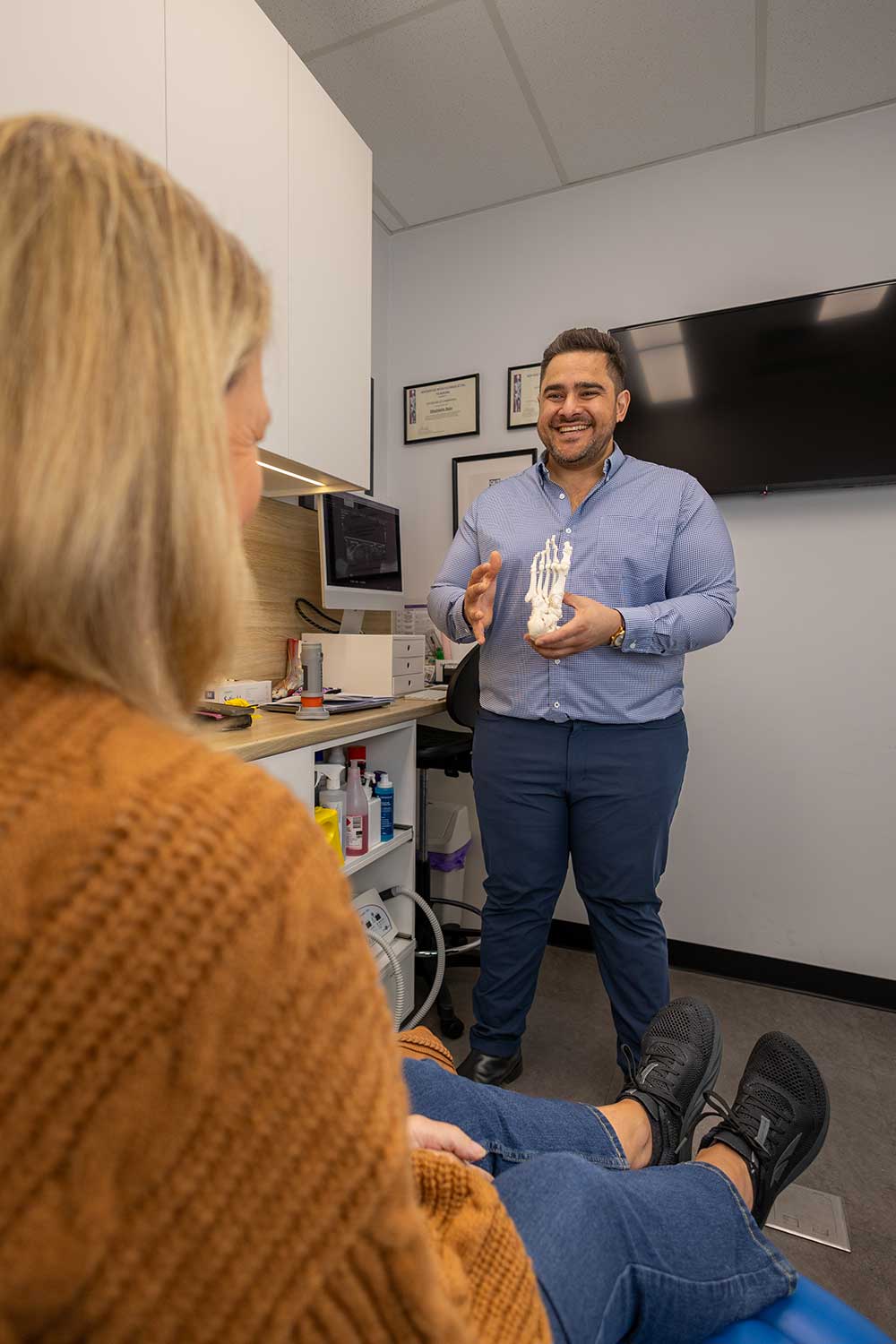
Book an appointment to get Sciatica pain treatment in Brisbane
If sciatica pain or leg pain is affecting your comfort or mobility, our team is here to help. Book an appointment to receive a thorough assessment and a clear, personalised treatment pathway.
FAQs
Can podiatrists help with and diagnose sciatica?
Yes. Podiatrists can help diagnose and assess how movement, posture, and lower limb mechanics may be contributing to sciatic nerve irritation.
What’s the difference between sciatica and regular back pain?
Sciatica involves nerve-related pain that travels into the leg, while back pain is often local and does not follow a nerve pathway.
How long does sciatica usually last?
Many cases improve within weeks with appropriate treatment, though recovery time depends on the cause and severity.
Do orthotics help with sciatica nerve pain?
Orthotics may help in some cases by improving lower limb mechanics and reducing strain through the spine.
When should I see a specialist for sciatica?
If pain is persistent, worsening, or associated with weakness or numbness, early assessment is recommended.