
Here at The Feet People, our podiatrists help manage shin splints, a common injury in runners, dancers, and those who play high impact sports. Shin splints, also known as medial tibial stress syndrome, are a painful overuse injury affecting the shin bone and surrounding tissues in the lower leg.
Shin splints consists of irritation and inflammation involving the bone tissue, connective tissue, and surrounding muscles along the inner border of the shin. Pain often develops gradually and can range from mild discomfort to severe shin splints that make activity difficult.
What Are Shin Splints?
Shin splints describe pain that develops along the inner border of the shin bone and down the lower leg, most commonly during or after physical activity. The condition occurs when repetitive stress on the shin bone exceeds the body’s ability to recover, leading to irritation of the bone and soft tissues.
People often describe that shin splints feel like a dull ache at first, which may progress to sharp pain if activity continues.
Common causes of shin splints
We commonly see shin splints developing when the lower leg is exposed to ongoing overload without adequate recovery. Common causes of shin splints include:
- Overuse injury from running, jumping, or walking on hard surfaces
- Sudden increases in training volume or intensity
- Poor or worn out footwear that fails to absorb shock
- Foot types such as flat feet or high arches
- Tight calves or tight muscles in the lower leg muscles
- Altered gait mechanics or alignment issues
All of these factors increase the risk factors and risk of developing shin splints by placing excess strain on the shin and surrounding leg muscles..
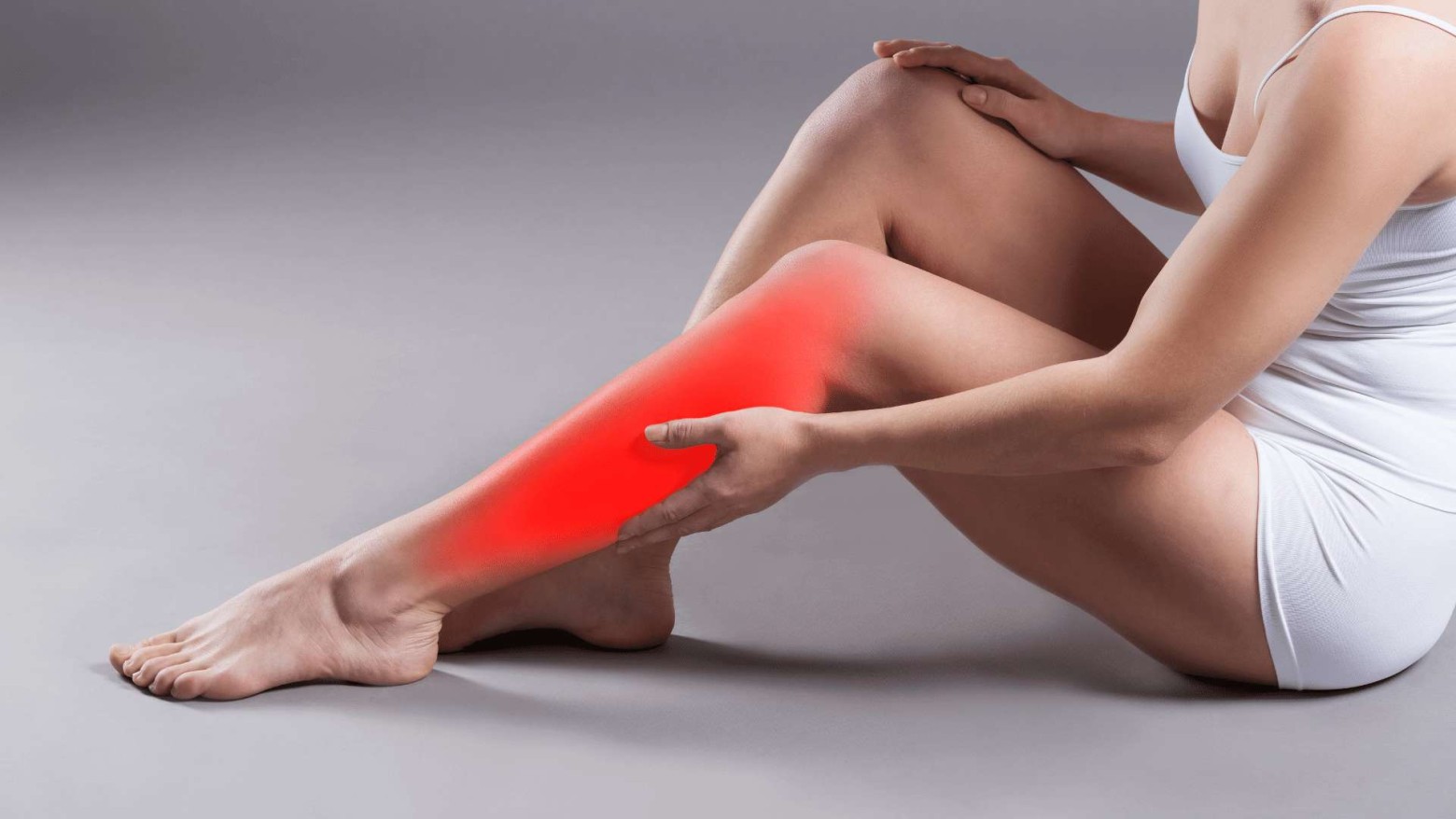
Symptoms of Shin Splints
The shin pain associated with shin splints usually develops gradually. Common symptoms include:
- Aching or sharp pain along the inner edge of the shin
- Tenderness along the shins
- Mild swelling or general swelling in the lower leg
- Pain that worsens during or after activity
- Reduced ability to stay pain free during training
If symptoms persist or worsen, further assessment is important to rule out conditions such as chronic exertional compartment syndrome or a stress fracture.
Identifying risk factors for shin splints
Certain people are at a higher risk of developing shin splints, particularly those who:
- Participate in frequent high-impact sports
- Train on hard surfaces without adequate recovery
- Have flat feet or biomechanical imbalances
- Experience muscle imbalances or weakness
- Have a history of sports injuries
Understanding these risks allows us to focus on both treatment and preventing shin splints from returning.
Brisbane clinic locations & opening hours
If you're worried you're developing shin splints, we can help. We provide shin treatment at both of our convenient Brisbane locations - in the CBD and Newmarket. Find clinic details and opening hours below:
Brisbane CBD clinic information
-
Mobile: 0483932145
Phone: (07) 3356 3579
Fax: (07) 3220 3851
Address: Ground Floor/344 Queen Street, Brisbane QLD 4000 -
Operating Hours:
Monday: 7:40am – 6:30pm
Tuesday: 7:40am – 6:00pm
Wednesday: 7:40am – 6:30pm
Thursday: 7:40am – 6:00pm
Friday: Temp Closed
Saturday: Closed
Sunday: Closed
Newmarket clinic information
-
Mobile: 0483932146
Phone: (07) 3356 3579
Fax: (07) 3220 3851
Address: Shop 114, Newmarket Village, 400 Newmarket Road, Newmarket QLD 4051 -
Operating Hours:
Monday: 7:40am – 6:00pm Tuesday: 7:40am – 6:00pm Wednesday: 7:40am – 6:00pm Thursday: 7:40am – 6:30pm Friday: 7:40am – 5:00pm Saturday: 7:40am – 4:30pm Sunday: Closed
How we diagnose, assess and treat shin splints
When you see us for shin splints, we begin with a detailed conversation about your symptoms, training load, and activity history. A thorough examination will be conducted including a physical exam of your lower leg, assessing tenderness, load tolerance, footwear, and movement patterns.
If needed, medical imaging such as an X-ray may be used to rule out a stress fracture or other bone injury. Our approach to shin splints treatment focuses on identifying what’s driving the overload and creating a clear plan to treat the shins safely and effectively.
Treatment for shin splints
Your treatment for shin splints is always individualised. Depending on your presentation, we may recommend:
Managing pain and inflammation from shin splints
Managing symptoms early helps reduce pain and prevent progression. Rest, ice packs, and temporary reduction in impact can help reduce swelling and provide symptom relief. When icing the injury, ice for 10 minutes, 2-3 times a day, especially post exercise for temporary pain relief. In some cases, physical therapy may be recommended as part of a broader rehabilitation plan. Our goal is to achieve pain relief, support healing, and help you return to activity without recurring pain. If pain becomes persistent or severe, reassessment is important to avoid progression to more serious injuries.
Why do we recommend early treatment of shin splints?
Without early care, shin splints can worsen and increase the risk of stress fracture or long-term pain. Early treatment helps control inflammation, protect the shins, and reduce recovery time. Addressing symptoms early often allows people to return to activity within a few weeks, rather than months.
Staying active while recovering from shin splints
You don’t need to stop all movement. We often recommend low impact exercises such as swimming or cycling to maintain fitness while reducing tibial load. Cross training supports recovery and lowers the chance of re-injury. The goal is to stay active while allowing tissues to heal.
Preventing Shin Splints From Coming Back
Preventing shin splints involves addressing the factors that caused them in the first place. Strategies include:
- Gradual progression of physical activity
- Wearing appropriate, supportive shoes
- Using orthotic or shoe inserts where needed
- Strengthening muscles and addressing imbalances
- Varying training surfaces and routines
These steps significantly reduce the chance of recurrence and support long-term, pain free movement.
Book an appointment to get shin splints treatment in Brisbane
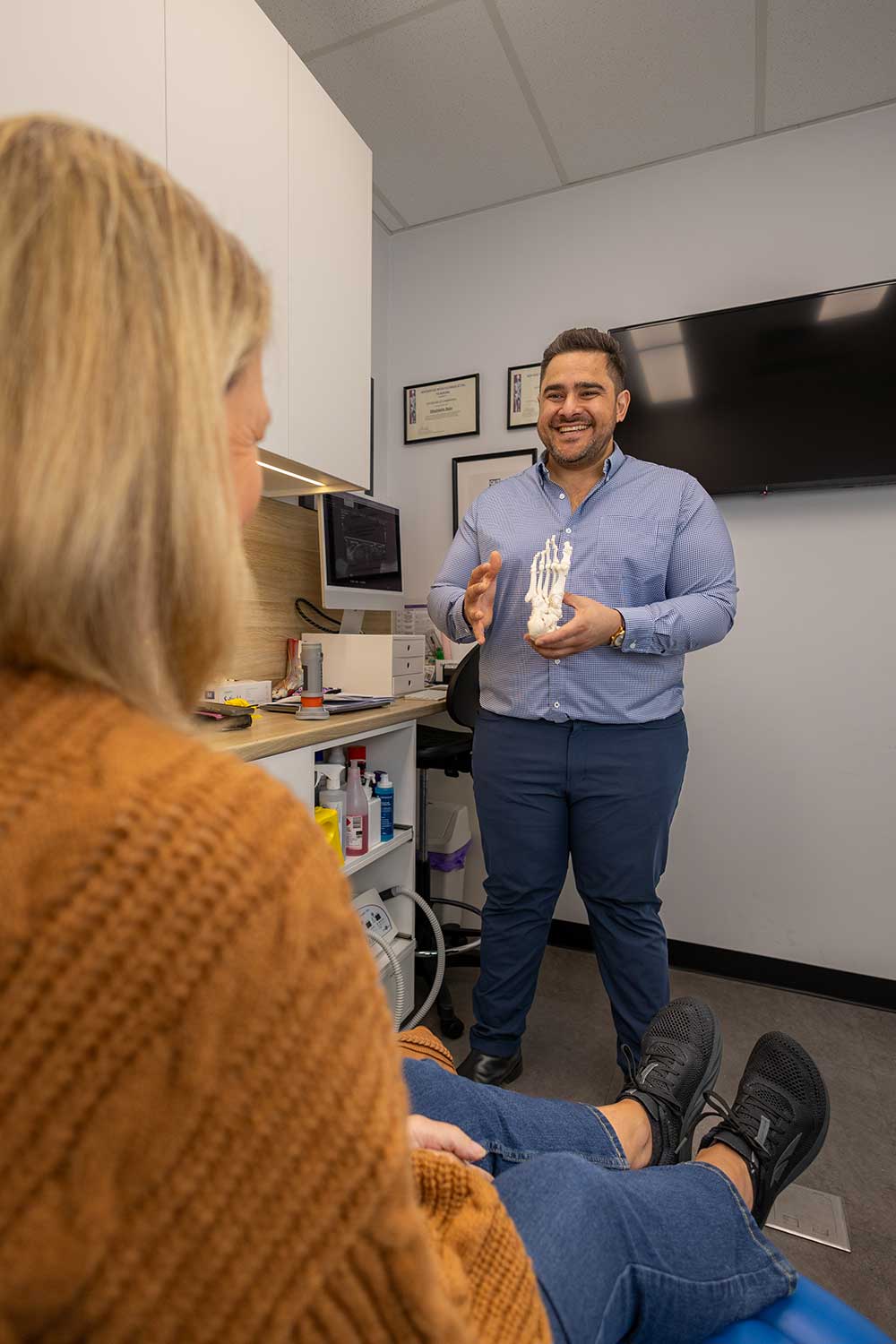
If shin pain is limiting your ability to train, walk, or stay active, our Brisbane podiatrists can help. Book an appointment for a thorough assessment and a clear plan to get you moving comfortably again.
FAQs
What is the fastest way to heal shin splints?
The fastest way to heal shin splints is to reduce load on the lower leg while supporting recovery. This usually involves temporarily modifying your physical activity, wearing supportive footwear, and addressing contributing factors such as tight muscles or poor shock absorption. Early treatment helps reduce pain, settle irritation of the bone tissue, and prevent symptoms from worsening.
Can podiatrists treat shin splints?
Yes. Podiatrists are well trained in diagnosing and treating shin splints. We assess how your muscles, footwear, training load, and biomechanics are affecting your shin bone. A thorough assessment allows us to create a targeted plan to reduce stress and guide safe recovery.
Do orthotics help with shin splints?
Orthotics can be very helpful in suitable cases. They work by reducing any increased pressure through the shin bone and supporting better load distribution through the lower leg. This can ease strain on the surrounding muscles and connective tissue during walking and running.
How long does it take for shin splints to go away and become pain free?
Recovery time varies depending on severity and how early treatment begins. Mild cases may improve within a few weeks, while more persistent symptoms can take longer. Addressing swelling, correcting training errors, and supporting healing early often shortens recovery time.
How can I prevent shin splints from coming back?
Preventing recurrence involves gradual progression of training, avoiding repeated running on hard surfaces, and maintaining strength and flexibility in the lower leg muscles. Wearing appropriate footwear and responding early to warning signs can significantly lower your higher risk of recurrence.
What causes swelling with shin splints?
Swelling - even just mild swelling can occur due to inflammation in the tissues around the shin bone. This happens when repeated stress overwhelms the body’s ability to recover. Managing load early helps reduce inflammation and prevent progression.
Can shin splints turn into something more serious?
If shin splints are ignored, ongoing stress can increase the risk of conditions such as a stress fracture or compartment syndrome. This is why early assessment is important if pain persists, worsens, or changes in nature.
Do anti-inflammatory treatments help shin pain?
Anti inflammatory strategies, such as ice and short-term medication (when appropriate), can help manage symptoms. These approaches aim to reduce inflammation and pain, but they work best when combined with load management and addressing the underlying cause.
When do I need an X-ray for shin splints?
An X ray may be recommended if pain is persistent, focal, or worsening, particularly to rule out a stress fracture or other bone injury. Imaging is usually considered after a thorough assessment and review of your medical history.
When should I see a healthcare provider for shin splints?
You should see a healthcare provider if pain is ongoing, worsening, or interfering with daily activities. Early assessment allows us to identify the cause, reduce stress on the shin bone, and guide safe return to activity.